

Feeding and water Setup and equipment
pH and EC meters: how to use and care for them
Calibrate with fresh buffers on your meter's schedule, keep a glass pH probe in its specified storage solution, and record EC instead of ambiguous PPM. Only compare root-zone samples taken with a…
On this page
pH tells you how acidic or alkaline water is. EC (electrical conductivity) reflects dissolved ions. Fertilizer adds to it, but so do salts in your source water, and EC can’t tell you which nutrients are present.
pH meter care
- Calibrate with fresh, separate portions of buffer, following your meter’s instructions. For many grow meters that means pH 7 first, then pH 4. Bluelab recommends at least monthly and after cleaning or suspect readings; other models may need more frequent checks. Never pour used buffer back into the bottle.
- Rinse the probe between solutions.
- Store it in storage solution. Distilled or RO water damages the probe.
- If a reading looks wrong, check it with pH drops as a quick second opinion.
EC and PPM
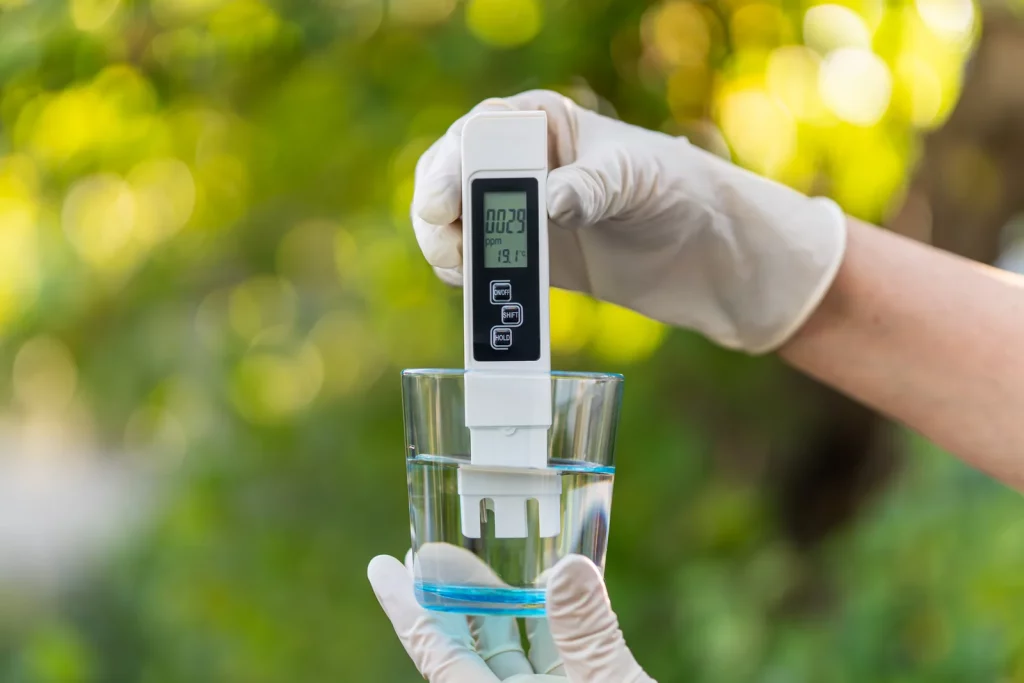
Set your meter to EC in mS/cm to avoid confusion. PPM meters measure EC and multiply it by a factor. Common scales include 500 and 700 (others exist too), so the same water can read as two different PPM numbers.
Checking the root zone
PourThru is one established extraction method for soilless substrates in containers. It doesn’t cover every soil or hydro system. Water normally, wait 30 to 60 minutes, then gently add distilled water to push about 50 mL into a clean saucer. How much you add depends on pot size, and too much dilutes the reading. Test promptly, and interpret the result for this extraction method instead of treating ordinary runoff as the same thing. See the EC and runoff guide.
Check or calibrate the EC probe using its manufacturer’s procedure and conductivity standard. EC is usually temperature-compensated to a reference temperature. Store a conventional glass pH probe in its specified storage solution; EC probes can have different storage requirements.