

Feeding and water Setup and equipment Flowering Seedling Vegetative
Pots, drainage and pot size for cannabis
Choose a container with drainage holes and keep it out of standing runoff. Don't add gravel to the bottom. Three to five gallons is a common indoor planning range, not a proven…
On this page
Roots need air as well as water, so pick a container that drains well. Good drainage makes overwatering much harder.
Fabric or plastic?
- Fabric pots drain and breathe through the sides and dry faster, which helps if you tend to overwater.
- Plastic pots hold water longer, which can help in a dry room.
How big?
- Small pots (1 to 2 gallons): quick grows with many small plants.
- 3 to 5 gallons: the usual size for a single indoor plant.
- Much larger pots: for long grows or living soil that feeds the plant for months.
Pot size is a common grower guide, and it also depends on how long you grow before flowering.
Drainage basics
- Make sure the pot has holes and the medium can drain out.
- Set it on a riser inside a saucer so roots aren’t sitting in runoff.
- Empty saucers after watering.
- Don’t add gravel or pottery shards to the bottom. University extension advice says this takes up root space and doesn’t improve drainage.
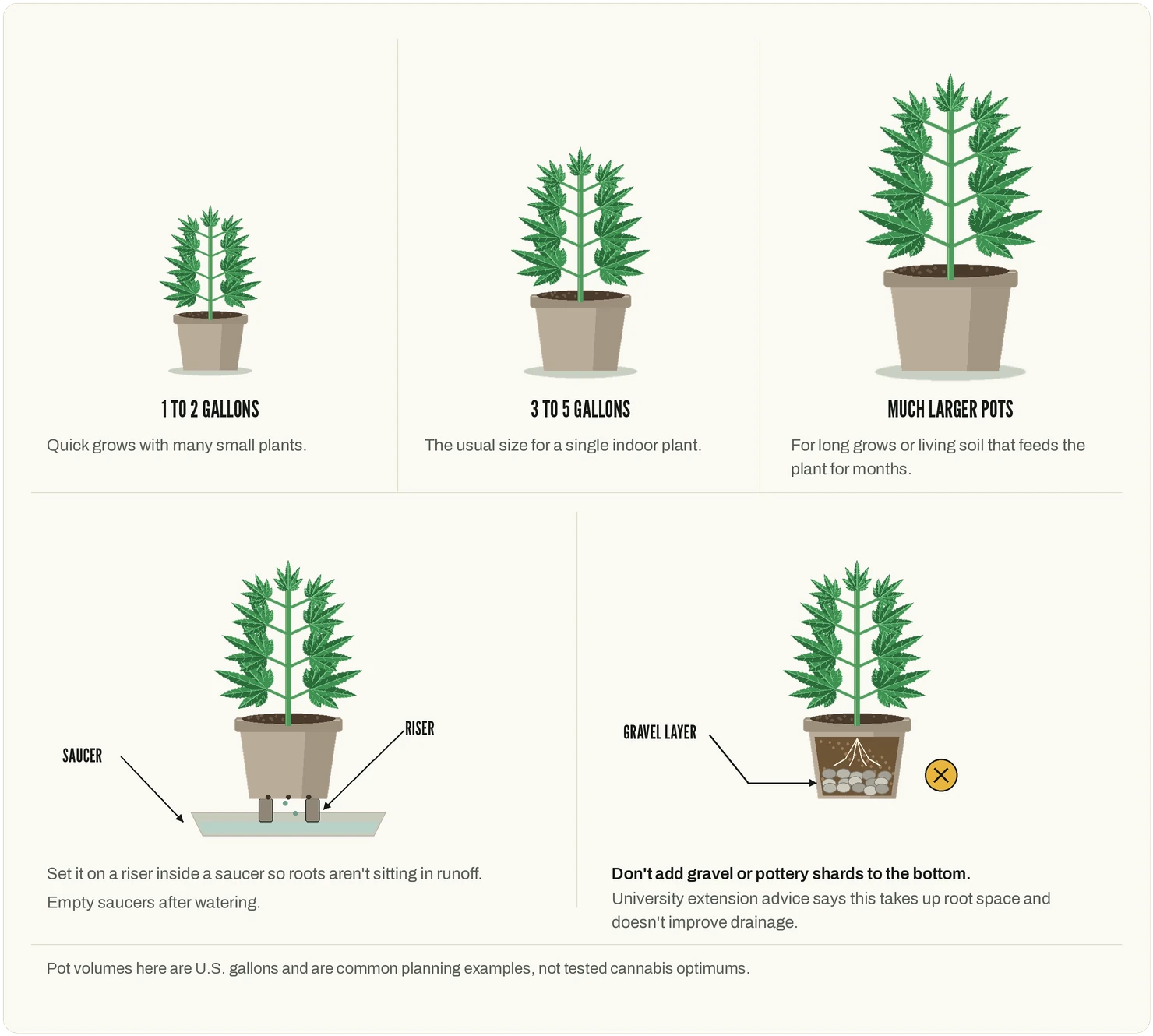
Pot volumes here are U.S. gallons and are common planning examples, not tested cannabis optimums. Self-watering and recirculating systems need their own reservoir routine. The advice to empty runoff applies to ordinary top-watered pots.
Sources (1)
- University of Maryland Extension. Growing vegetables in containers and salad tables. https://extension.umd.edu/resource/growing-vegetables-containers-and-salad-tables [Evidence access: EXTENSION TEXT VERIFIED.]