

Getting started Lifecycle Flowering Vegetative
How to tell male from female plants, and what to do about hermaphrodites
Check the nodes where branches meet the stem for female flowers or pollen sacs. If you're growing unseeded flower, keep pollen-producing plants separate before the sacs open. Assess unexpected sacs rather than…
On this page
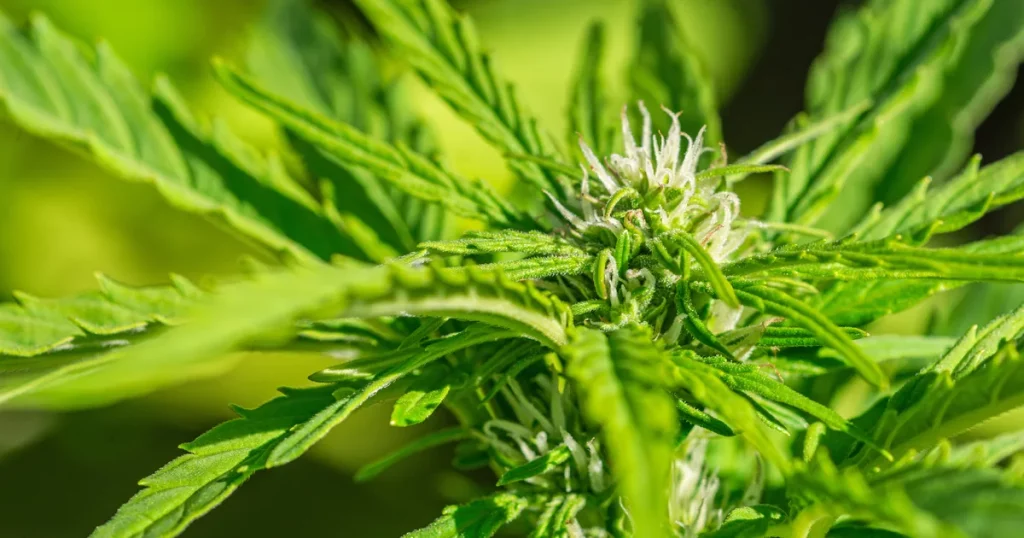
Female plants produce the resin-rich flower clusters people usually grow for consumption. Male flowers make pollen, which can fertilize female flowers and lead to seeds.
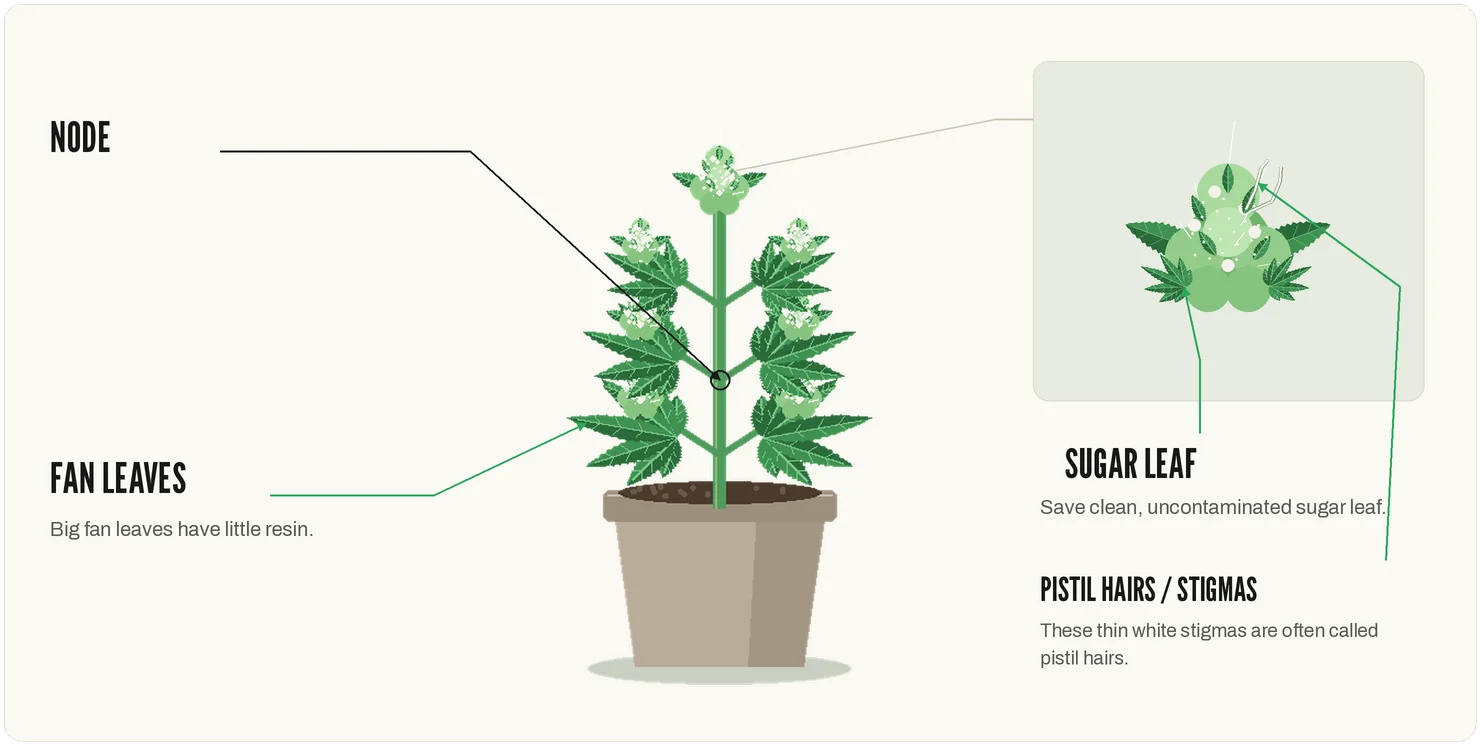
Look closely at the structures developing at the nodes. Compare the pre-flower details below with the plant-part labels above.
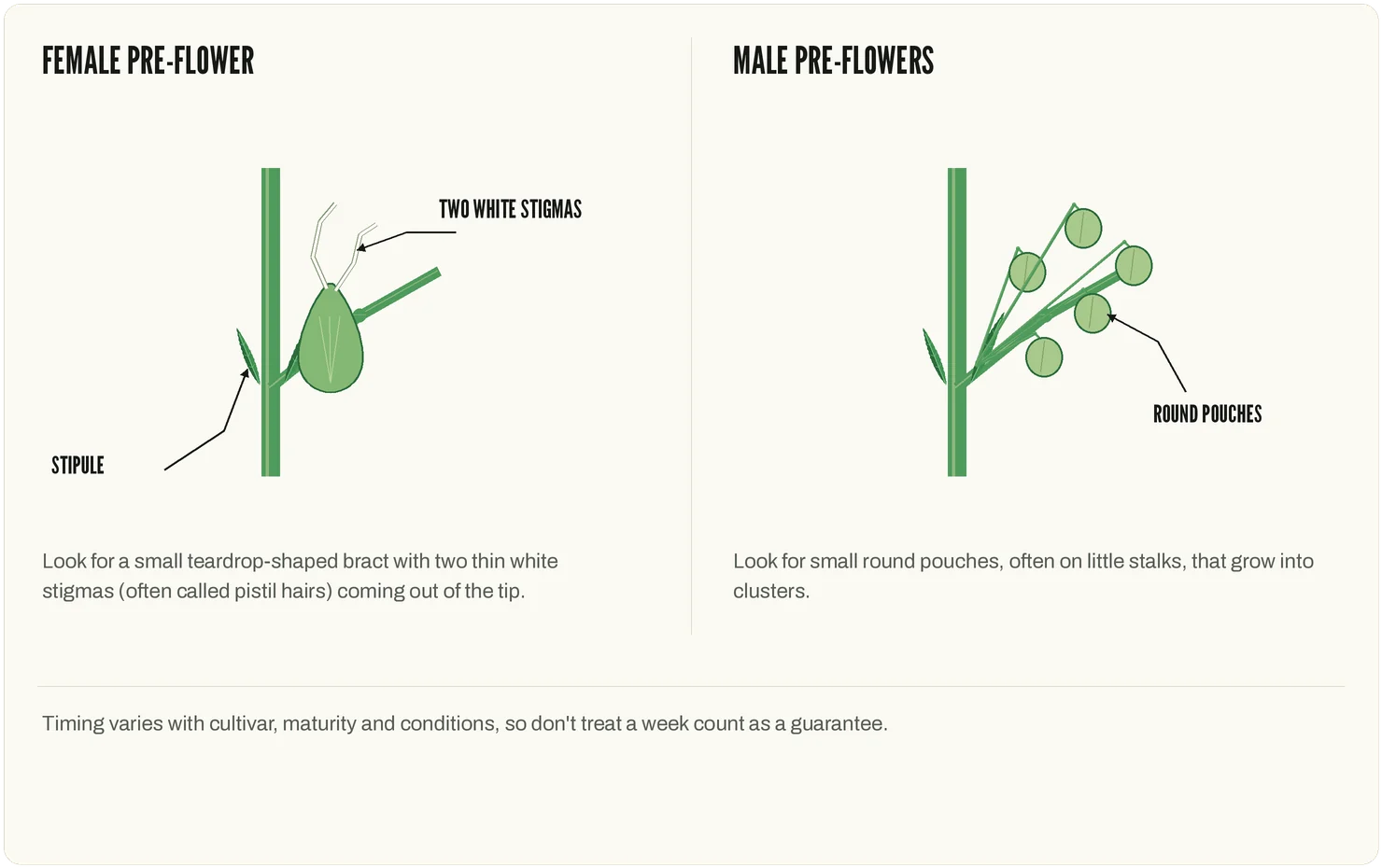
What to look for
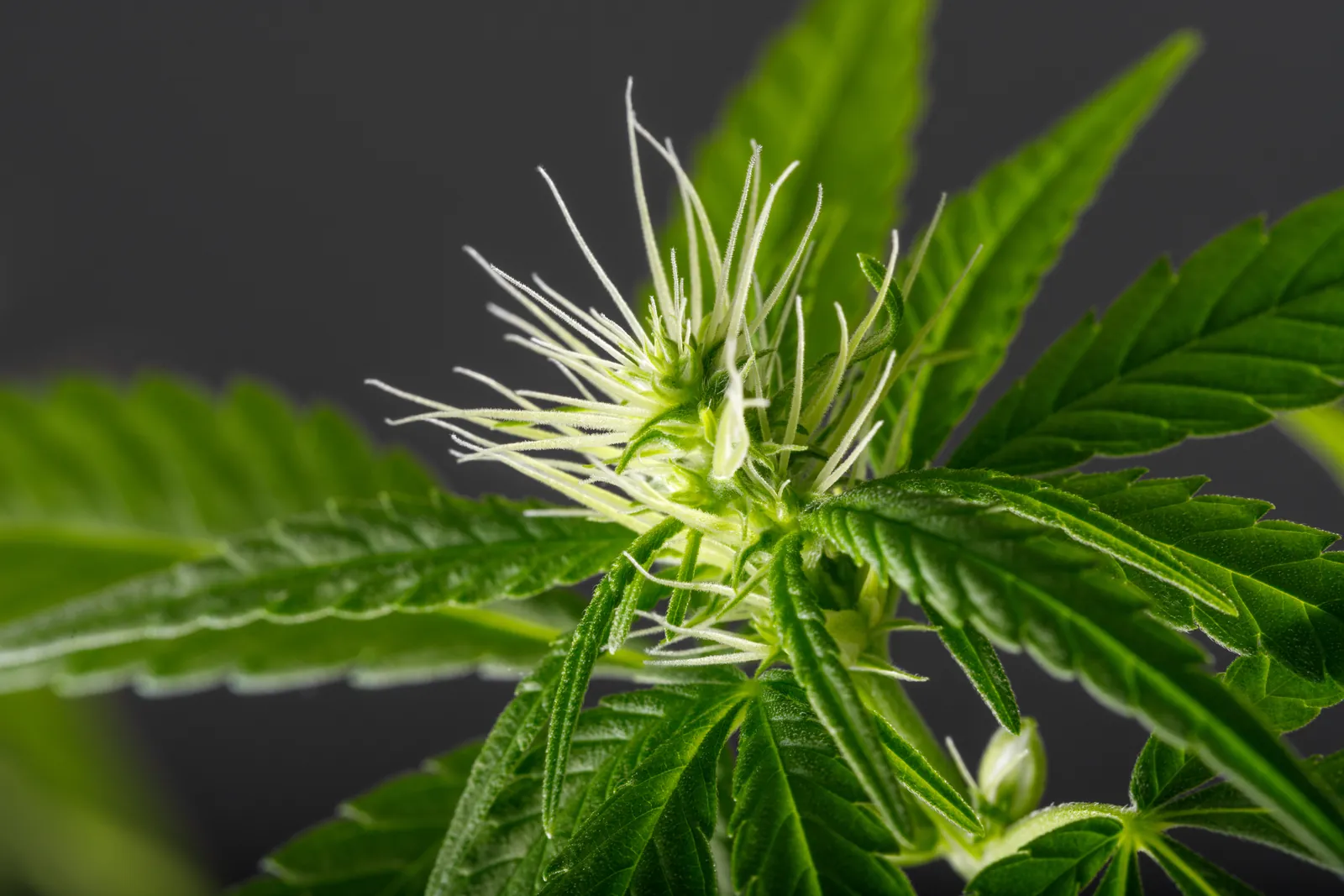
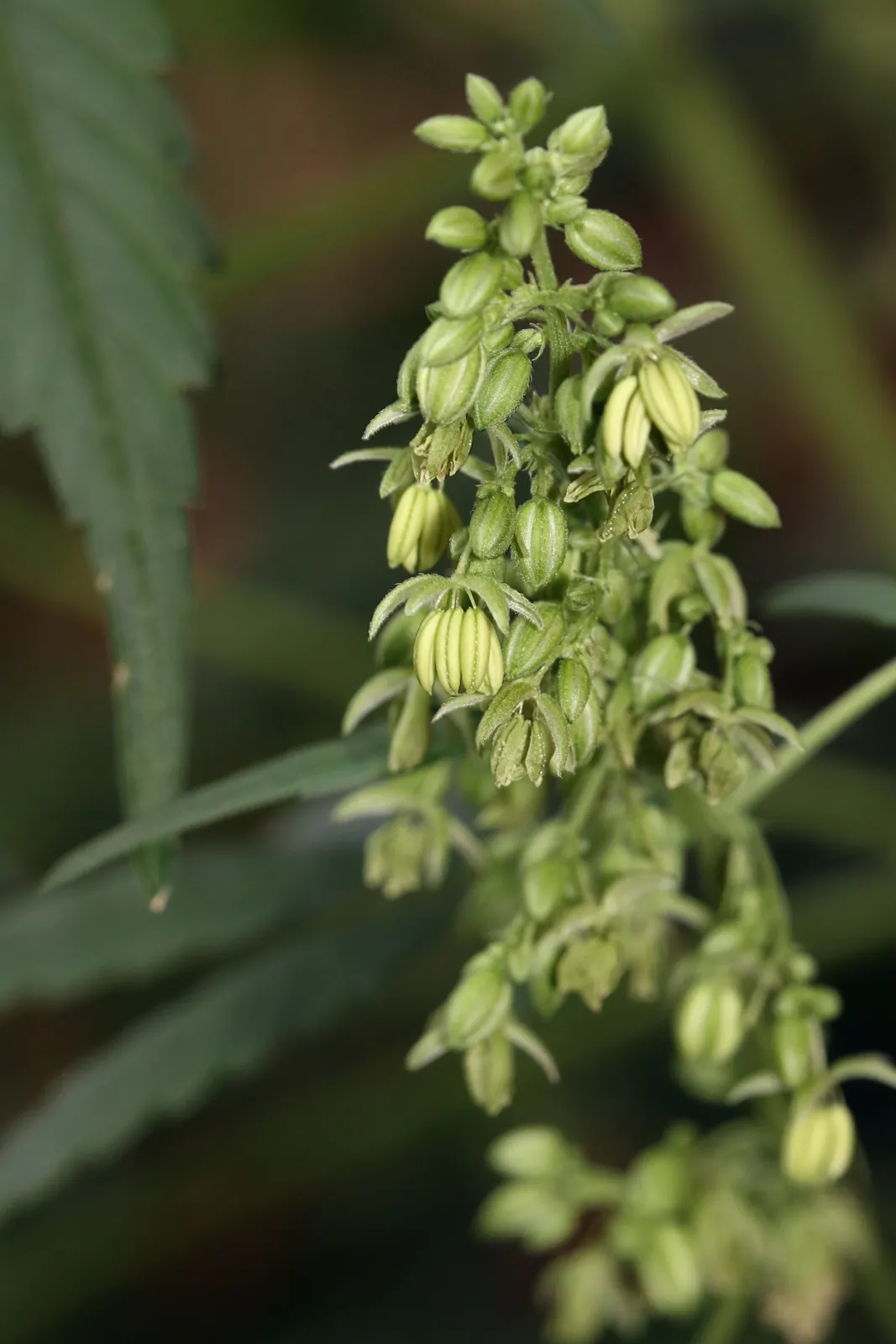
- Female: a small teardrop-shaped bract with two thin white stigmas (often called pistil hairs) coming out of the tip.
- Male: small round pouches, often on little stalks, that grow into clusters.
- Easy to confuse: the sharp green blades at the base of each leaf stem (stipules). Every plant has them.
Plants from regular seed may show their sex during vegetative growth or after the switch to short days. Timing varies with cultivar, maturity and conditions, so don’t treat a week count as a guarantee. Feminized seed is meant to produce overwhelmingly female plants, but it isn’t an absolute guarantee, so keep checking for pollen-producing flowers.
Removing a male
If you want unpollinated flower, separate a pollen-producing plant before the sacs open. Don’t shake it, contain it carefully, and clean the area. If pollen has already been released, removing the plant or misting can’t guarantee nearby flowers stay unpollinated. Avoid wetting healthy buds.
Hermaphrodites and late ‘nanners’
- Plants can grow male parts under stress or because of genetics, even when seeds are feminized.
- Check for light leaks during the dark period. Growers commonly report them as a trigger.
- Yellow, banana-shaped anthers, often called “nanners,” can release pollen. Isolate the plant and see how widespread they are; picking them off may miss others or pollen that’s already out. Base harvest timing on flower maturity and health, not anthers alone.
- If you find seeds in your harvest, a plant likely made pollen. Don’t replant seeds from a plant that threw many early sacs.
Sources (1)
- Livingston, S. J., et al. (2020). Cannabis glandular trichomes alter morphology and metabolite content during flower maturation. The Plant Journal, 101(1), 37–56. https://onlinelibrary.wiley.com/doi/full/10.1111/tpj.14516 [Evidence access: FULL TEXT VERIFIED.]