

Lifecycle Training and technique Flowering Seedling Vegetative
How to train autoflowers safely
Autoflowers run on their own clock, so train gently and early. Bending and tucking leaves is safest. Only top a plant that's already strong, and well before it starts flowering.
On this page
Autoflowers start flowering after a few weeks whatever the light schedule, so they have less time to recover from rough handling.
A safe approach
- First two weeks: focus on roots, warmth and gentle watering. Don’t train yet.
- From about week 2 to 3: start low-stress training. Gently bend the main stem and tuck leaves aside instead of cutting them.
- Topping: only if the plant is growing vigorously, and only early. Many growers skip it.
- After pre-flowers appear: keep adjusting ties, but avoid cutting.
Leaf tucking
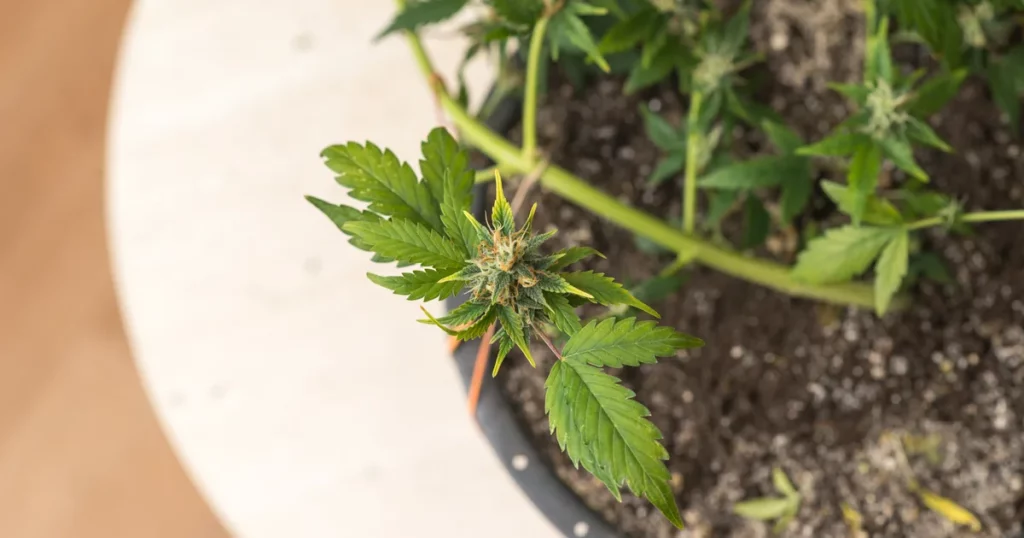
If a leaf is shading a bud site, tuck it under a branch instead of removing it. The plant keeps the leaf’s energy.
What to avoid
- Heavy defoliation.
- Mainlining or stripping lower branches.
- Rough or late transplanting. Starting in a final container can reduce handling, but a seedling in a large pot still needs careful moisture management. Transplanting isn’t automatically harmful.
This timing is a conservative grower approach, not a cultivar-tested schedule. The studies cited here don’t establish a best autoflower training program. Go by the plant’s actual size, health and flexibility, not the week number alone.
Stop if a stem resists, splits or wilts, and loosen ties as it thickens. Don’t deliberately dry a plant out to make training easier.