

Harvest and cure Lifecycle Drying and curing
How to dry cannabis: slow, cool and dark
A common starting point for drying is about 60°F and 60% relative humidity, with gentle, indirect airflow. Adjust to your conditions. Neither a week count nor a snapping stem proves flower is…
On this page
Drying is where homegrown flower most often gets spoiled. Drying conditions affect aroma and handling quality, but “slow” isn’t automatically safer or better: flower that stays wet too long encourages microbial growth.
A common routine
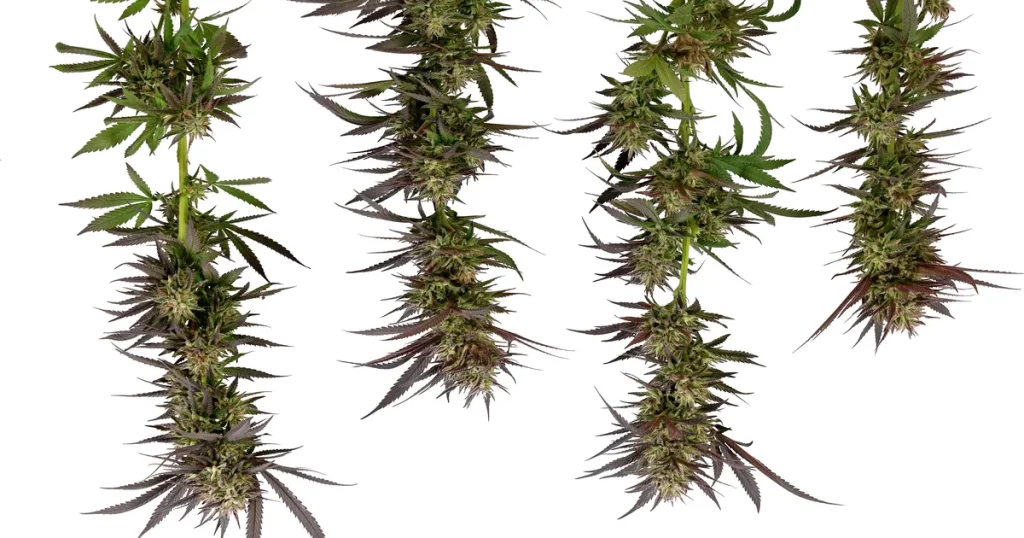
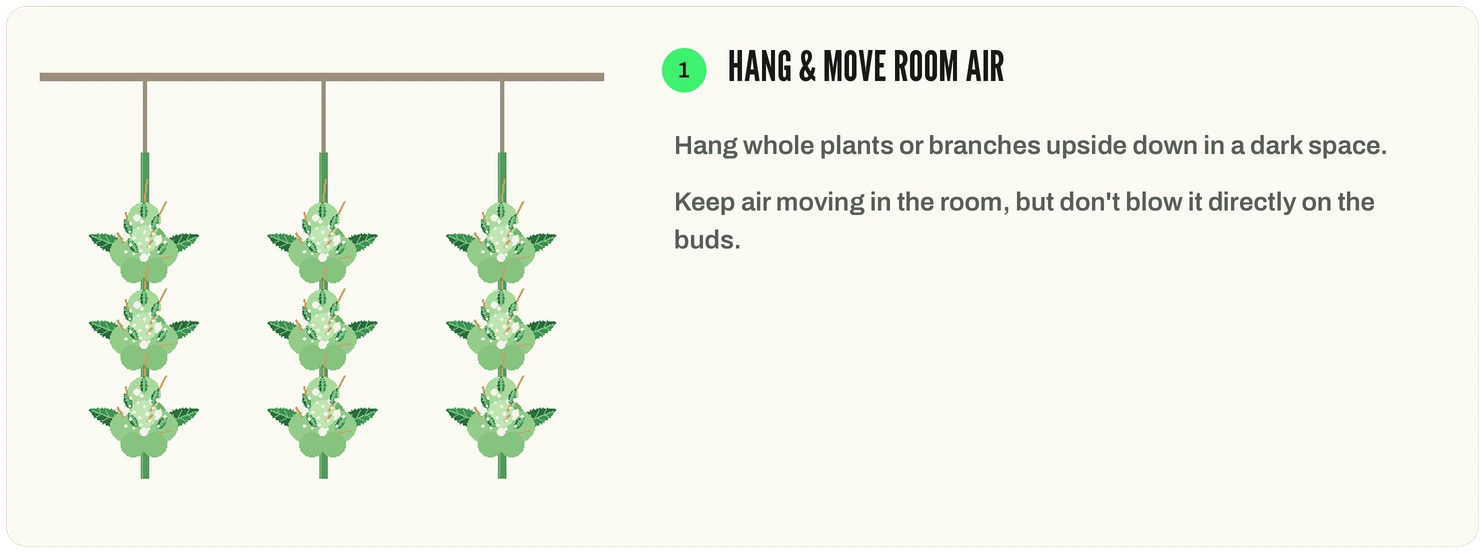
- Hang whole plants or branches upside down in a dark space.
- Aim for around 60°F and 60 percent relative humidity. This “60/60” target is grower convention.
- Keep air moving in the room, but don’t blow it directly on the buds.
- One to two weeks is a common planning window, not a safety deadline. Bud size, airflow, how much you hang and room conditions all change the time needed. Check progress daily.
When is it dry?
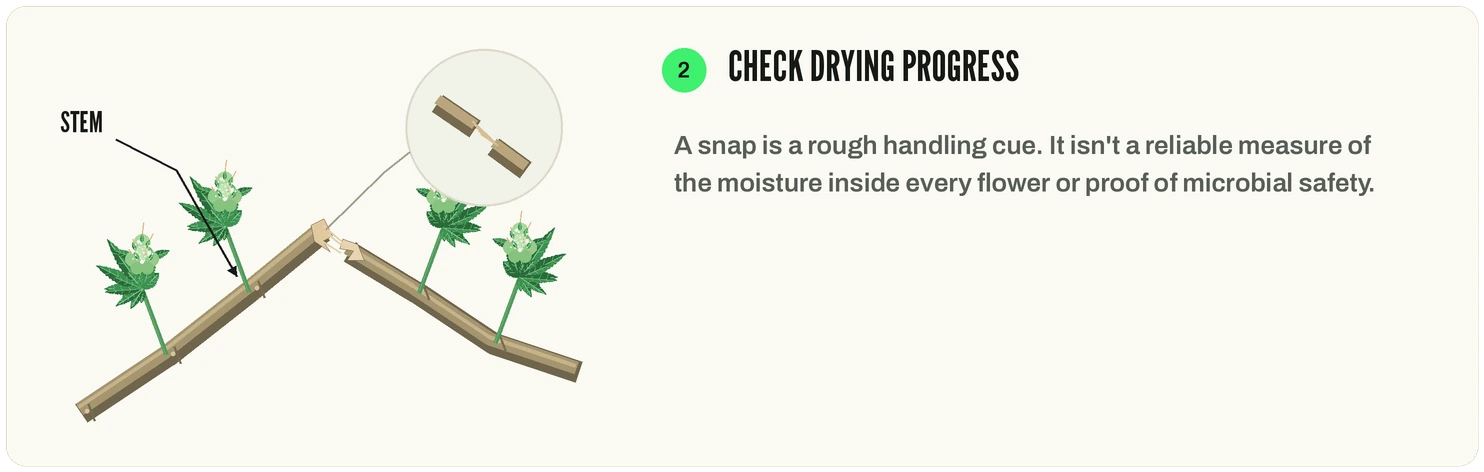
- Bend a small stem. A snap is a rough handling cue. It isn’t a reliable measure of the moisture inside every flower or proof of microbial safety.
- The buds should feel dry outside but not crumble.
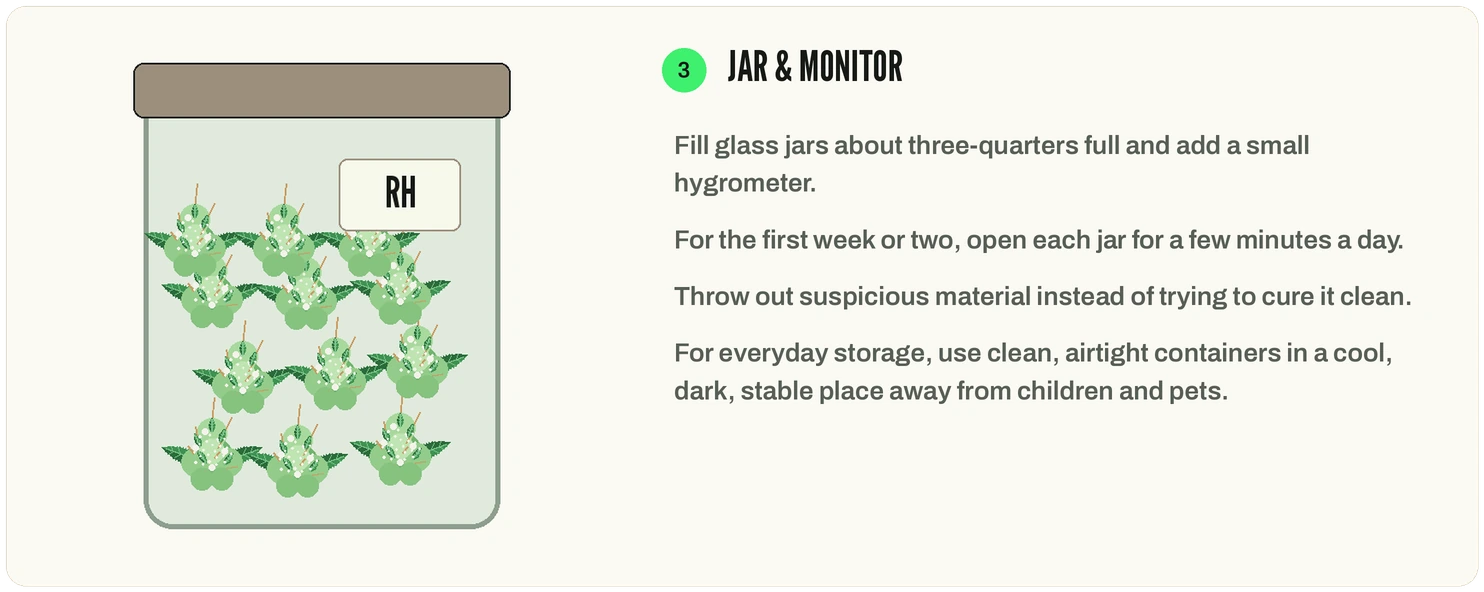
- A jar hygrometer can help you track moisture as it evens out, but let the reading stabilize at a steady temperature first; half a day isn’t a universal equilibration time. Cheap sensors can be inaccurate. A calibrated water-activity meter is the more appropriate way to check finished-flower aw.
Why moisture level matters
ASTM International’s specification for dry cannabis flower uses a water activity range of 0.55 to 0.65. The standard’s public summary uses this range to limit unwanted microbial growth and physical breakage. It isn’t proof that a batch is free of existing mold or toxins, and it doesn’t prescribe a drying time or room setting.
Common problems
- Changing smell: a grassy note can happen during drying, but a musty or ammonia-like odor, visible fuzz or decay needs inspecting right away. Don’t assume curing will fix it.
- Dried in a few days: too hot or dry. Next time, review temperature, airflow, flower size and room humidity together. Don’t add moisture blindly or create condensation.
- Too dry: a humidity pack at 58 or 62 percent can slowly restore some moisture. Don’t add fruit peel, bread or lettuce; they invite mold.
Keep suspicious or moldy flower out of the usable harvest. Don’t try to make it safe by cutting off visible mold, washing, drying, curing or extracting it. A humidity pack changes moisture. It doesn’t fix contamination or bring back lost terpenes.
Sources (2)
- ASTM International (2022). ASTM D8197-22: Standard specification for maintaining acceptable water activity (aw) range (0.55 to 0.65) for dry cannabis flower intended for human/animal use. https://store.astm.org/d8197-22.html [Evidence access: PUBLIC ABSTRACT/SCOPE VERIFIED; paid full standard NOT VERIFIED.]
- Punja, Z. K., Collyer, D., Scott, C., Lung, S., Holmes, J., & Sutton, D. (2019). Pathogens and molds affecting production and quality of Cannabis sativa L. Frontiers in Plant Science, 10, 1120. https://www.frontiersin.org/journals/plant-science/articles/10.3389/fpls.2019.01120/full [Evidence access: FULL TEXT VERIFIED.]