

Feeding and water Setup and equipment Flowering Vegetative
EC, PPM and the pour-through test
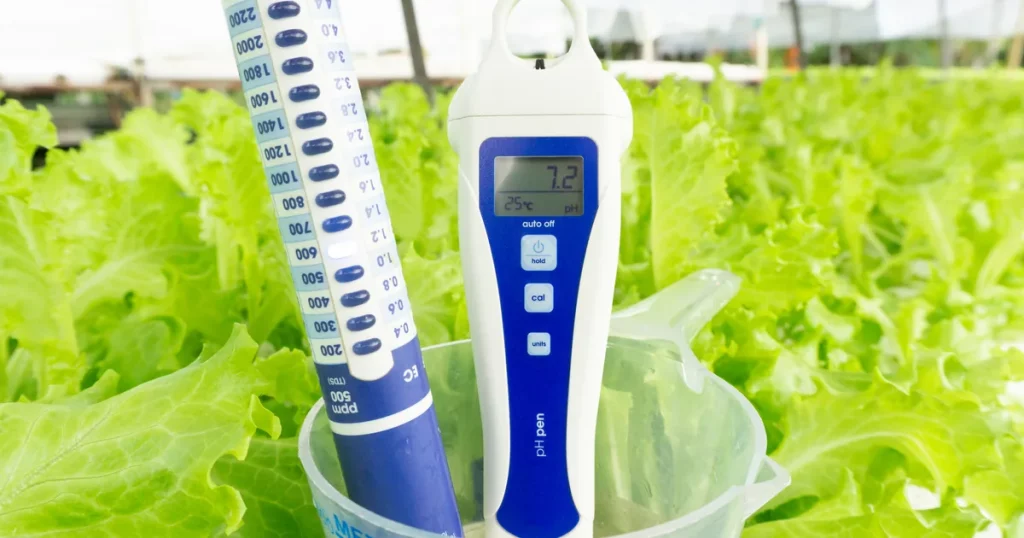
EC tracks dissolved ions, including salts already in your water; it does not show the balance of individual nutrients. Many meters estimate PPM using a 500 or 700 conversion factor, and other…
On this page
EC (electrical conductivity) is useful for tracking total dissolved ions. It includes salts from your source water and can’t show whether individual nutrients are balanced.
EC to PPM
Use EC to avoid mixups, and always know which scale a feed chart uses. Many PPM/TDS meters convert EC in mS/cm using a 500 or 700 factor, and other factors exist too. The result is an estimated total-dissolved-solids reading, not a measurement of nutrient composition. The same EC reads differently on each scale.
| EC (mS/cm) | PPM (500 scale) | PPM (700 scale) |
|---|---|---|
| 0.4 | 200 | 280 |
| 1.0 | 500 | 700 |
| 1.6 | 800 | 1,120 |
| 2.0 | 1,000 | 1,400 |
How to run a pour-through test
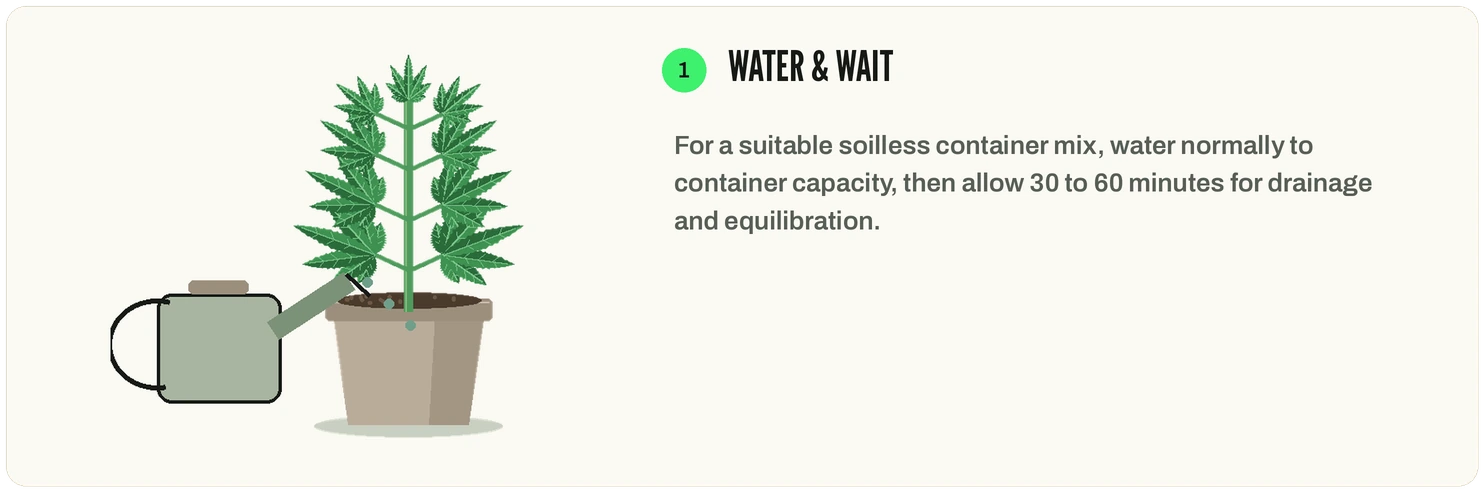
- For a suitable soilless container mix, water normally to container capacity, then allow 30 to 60 minutes for drainage and equilibration.
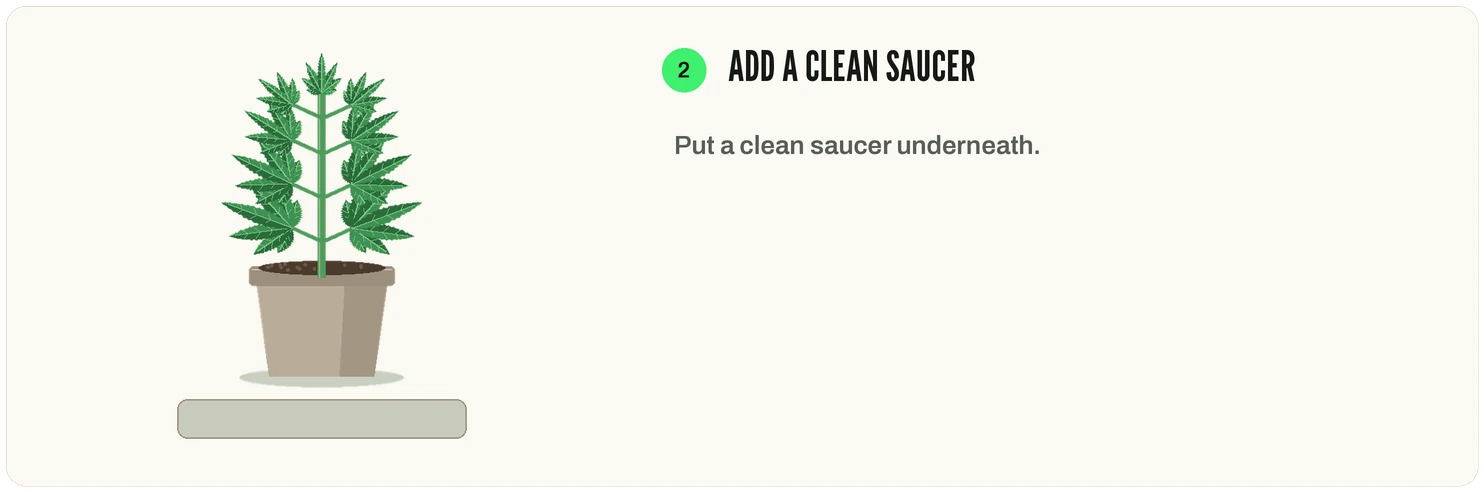
- Put a clean saucer underneath.
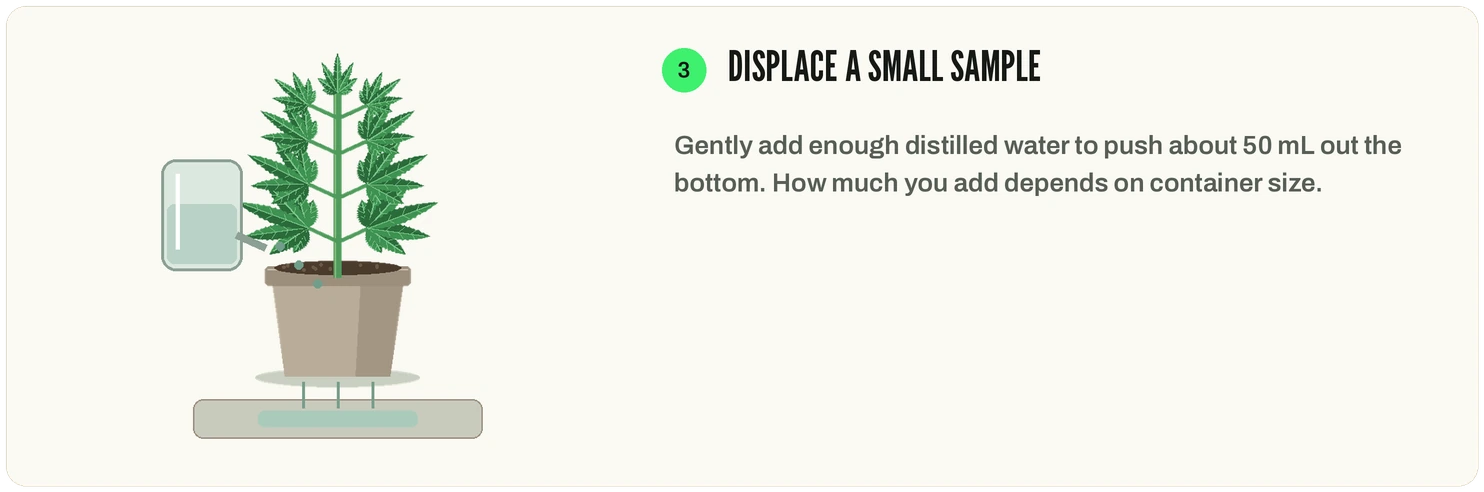
- Gently add enough distilled water to push about 50 mL out the bottom. How much you add depends on container size. Don’t use an arbitrary large drench or dilute the sample.
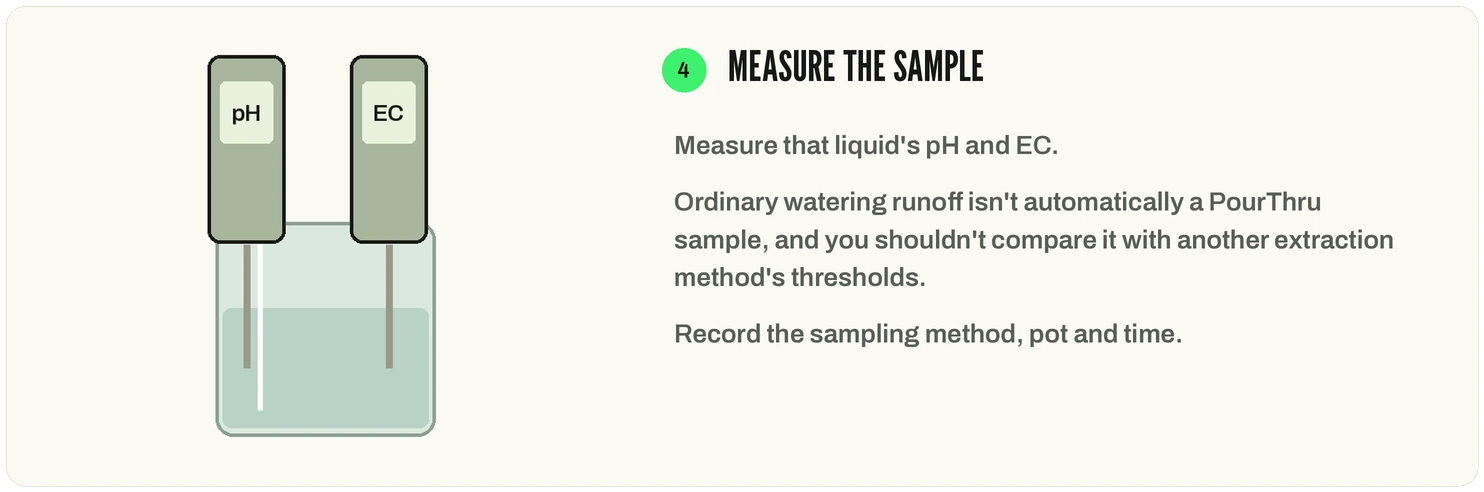
- Measure that liquid’s pH and EC.
This method was developed for container substrates and is described by NC State and Purdue Extension. Record the sampling method, pot and time. Compare with ranges for this method and with your previous samples. Feed EC and PourThru EC are different measurements, so a higher extract value alone doesn’t diagnose overfeeding.
What to do with the result
- A rising extract EC trend can suggest salt buildup. Check source water, fertilizer, plant growth and the extraction method before cutting feed or leaching.
- If pH is far from your target, check input pH and runoff, and see the pH guide and salt buildup guide.
For a recirculating hydroponic reservoir, sample the solution directly. For mineral soil, use an appropriate soil test. Ordinary watering runoff isn’t automatically a PourThru sample, and you shouldn’t compare it with another extraction method’s thresholds.
Sources (4)
- Purdue Extension. pH and electrical conductivity measurements in soilless substrates. HO-237-W. https://ag.purdue.edu/department/hla/extension/extension-publications-library/ext-pubs/ho-237-w.html [Evidence access: EXTENSION TEXT VERIFIED.]
- University of Minnesota Extension. Small-scale hydroponics. https://extension.umn.edu/how/small-scale-hydroponics [Evidence access: EXTENSION TEXT VERIFIED.]
- Bluelab. How to calibrate your Bluelab pH Pen or Probe; pH probe care, maintenance and storage. https://support.bluelab.com/calibrate-bluelab-ph-pen [Evidence access: MANUFACTURER TEXT VERIFIED.]
- Bluelab. FAQ and troubleshooting: Bluelab Combo Meter. https://support.bluelab.com/faq-bluelab-combo-meter [Evidence access: MANUFACTURER TEXT VERIFIED.]