

Environment Flowering Seedling Vegetative
Common cannabis pests and how to prevent them
Prevention beats cure: quarantine new plants, screen your intake air, check leaves weekly with a magnifier, and keep sprays out of flowering buds. A review of hemp pests singled out corn earworm,…
On this page
Integrated pest management (IPM) means preventing pests, checking often and choosing the gentlest fix that works.
Prevention
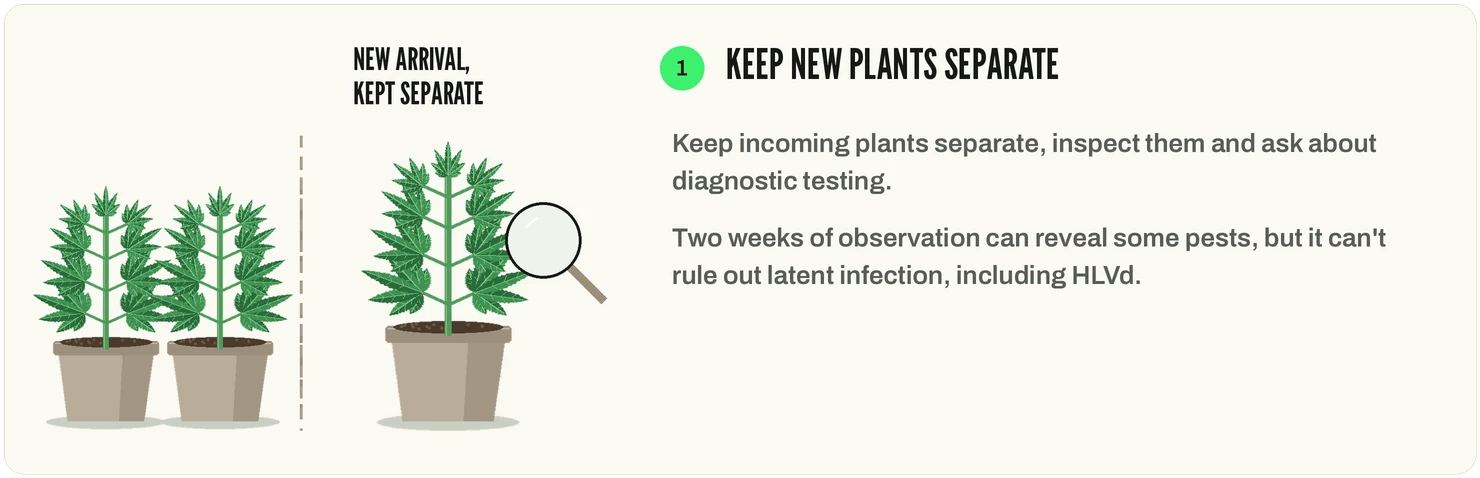
- Keep incoming plants separate, inspect them and ask about diagnostic testing. Two weeks of observation can reveal some pests, but it can’t rule out latent infection, including HLVd.
- Change clothes or wash your hands after being outside or around other plants.
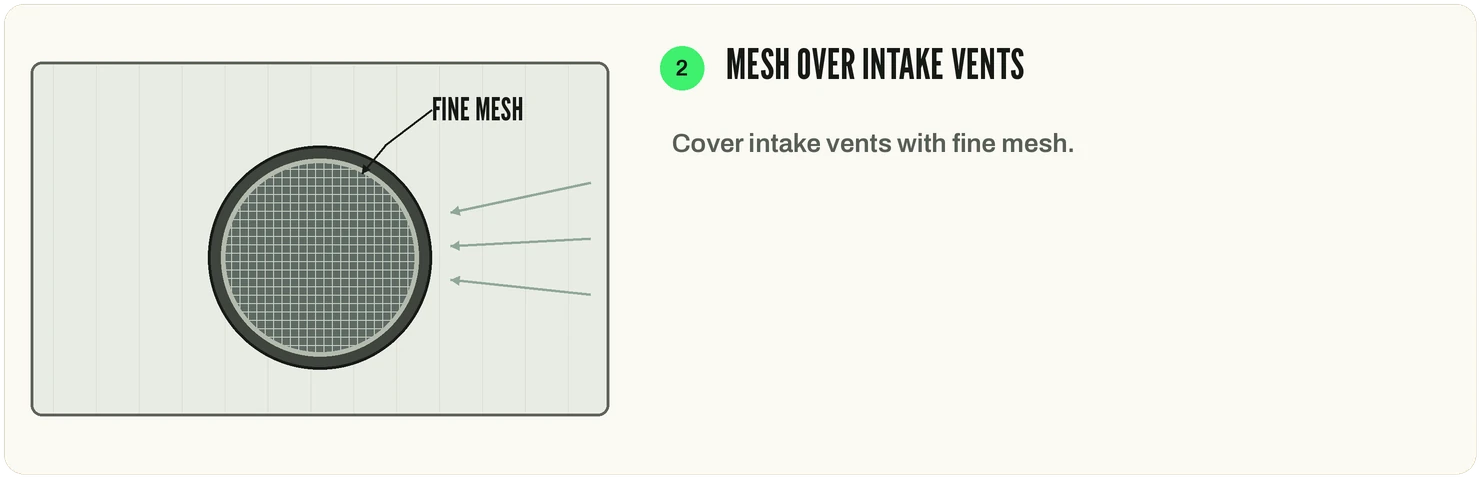
- Cover intake vents with fine mesh.
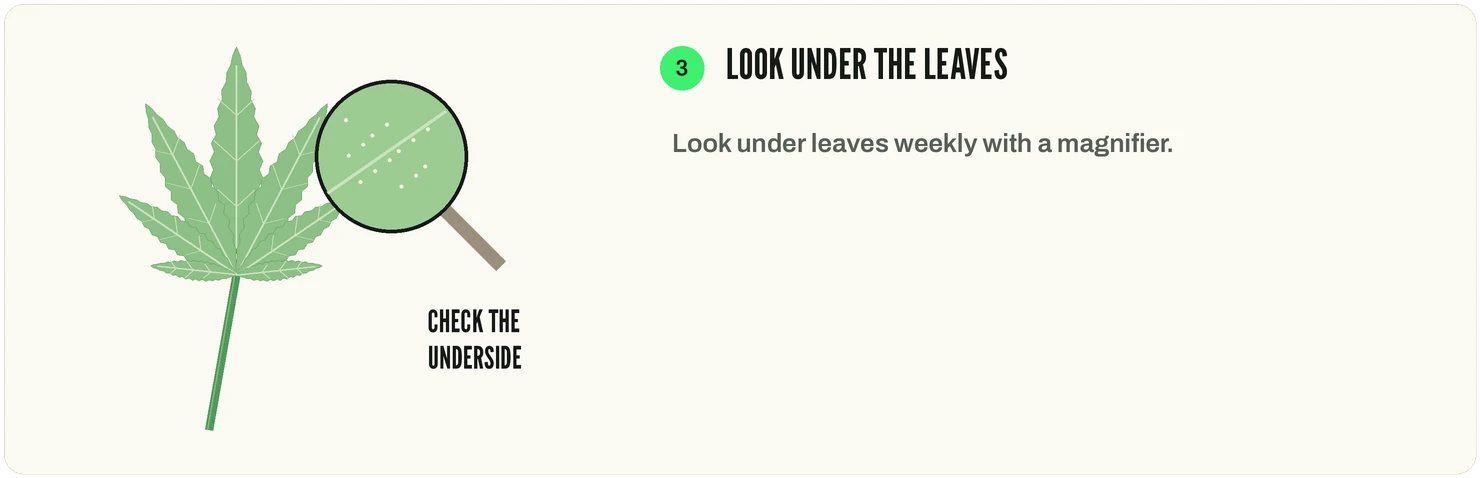
- Look under leaves weekly with a magnifier.
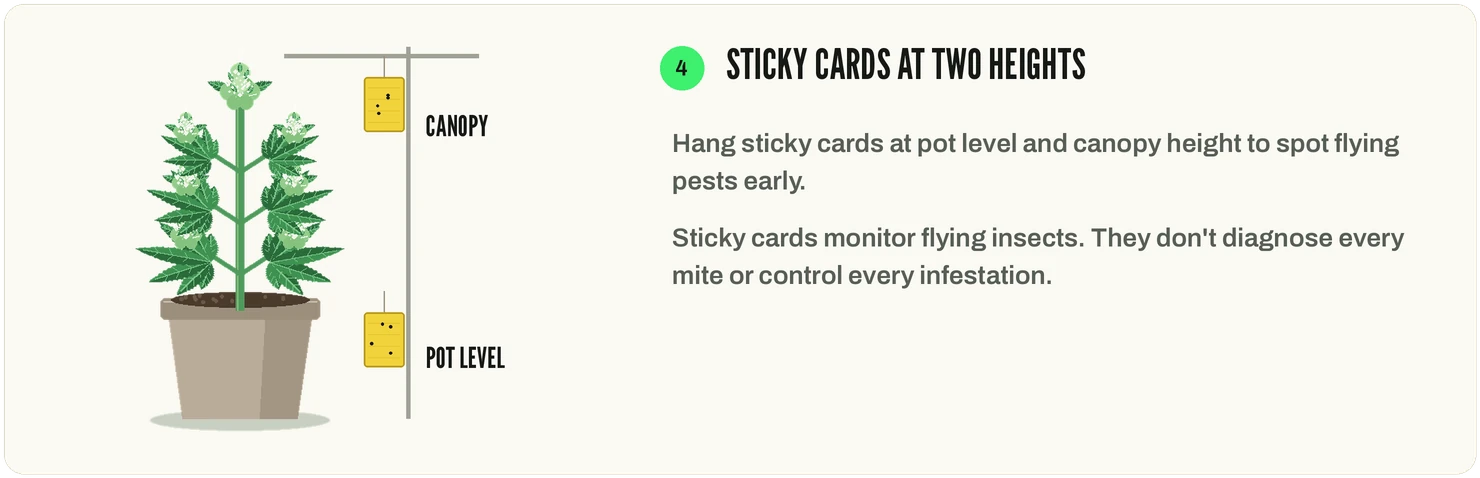
- Hang sticky cards at pot level and canopy height to spot flying pests early.
- Clean the tent between harvests.
Who is who
| Pest | What you see | Notes |
|---|---|---|
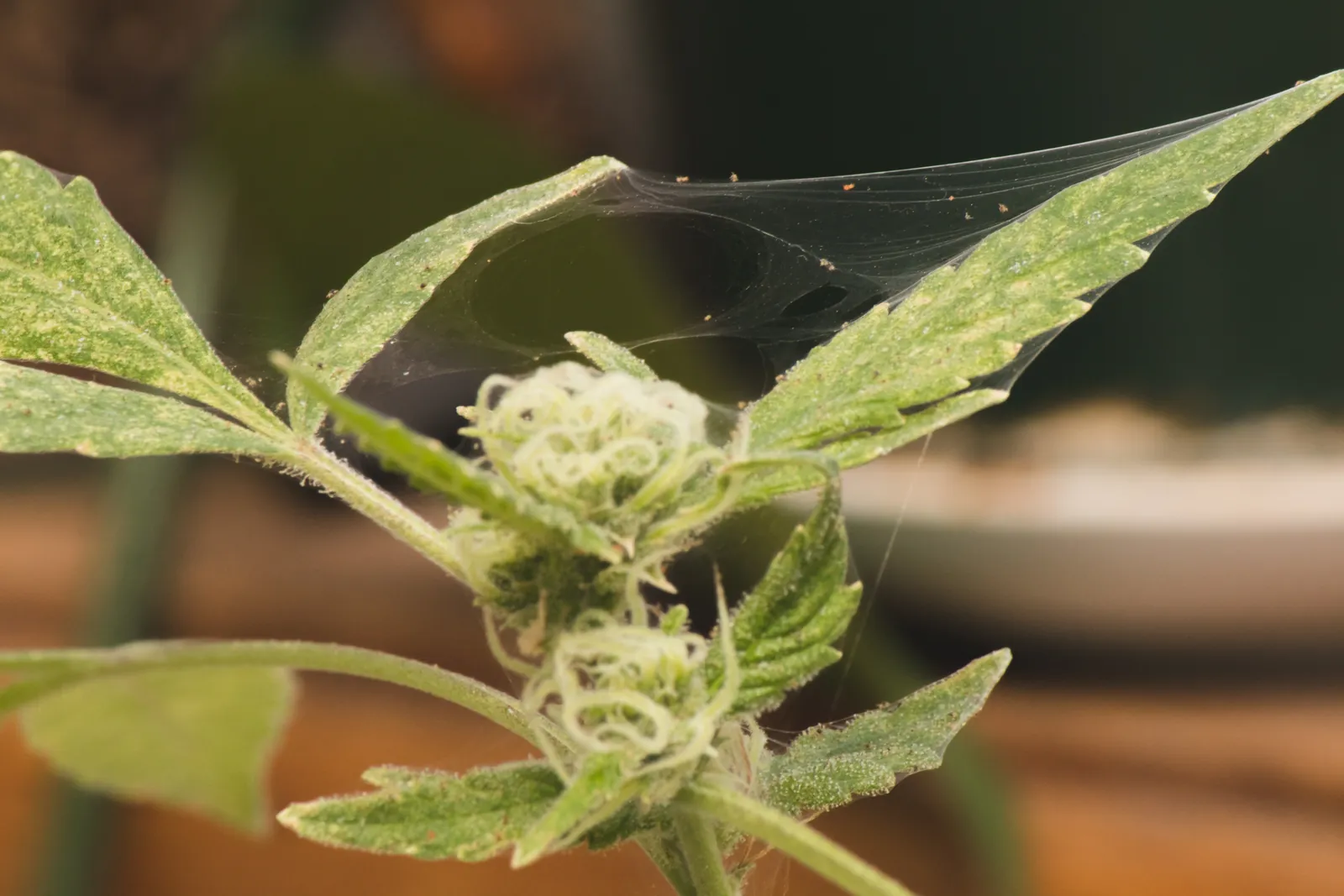
| Spider mites | Tiny pale dots on leaves, sometimes webbing | Check leaf undersides |
| Fungus gnats | Small flies near wet soil | Larvae live in damp topsoil; let it dry between waterings |
| Thrips | Silvery scrapes and black specks | Sticky cards help catch them |
| Aphids | Clusters on stems and leaf undersides, sticky residue | Named among the most damaging sap feeders in hemp |
| Hemp russet mites | Twisted, bronzed new growth; too small to see unaided | Need a strong magnifier; also named as highly damaging |
| Caterpillars (corn earworm) | Chewed buds with droppings | A serious outdoor flower pest in the regional hemp observations summarized in 2019 |
| Whiteflies | Tiny white insects fly up when you shake the plant | Use sticky cards |
Treating
- Identify the pest first. Then consider exclusion, removal and suitable biological controls. Only use a pesticide, including a soap, oil or microbial product, if the exact label and current local rules allow it for that crop, site and use. Hemp use doesn’t automatically authorize use on marijuana. Follow the rates, protective equipment, re-entry and preharvest intervals, and never improvise a household-product spray.
- Don’t spray flowering buds. Residues stay on the flower, and moisture invites mold.
- Predatory insects can help in flower.
Sticky cards monitor flying insects. They don’t diagnose every mite or control every infestation. Predators also need correct identification and suitable environmental conditions. Keep suspect flower out of use if it’s contaminated or decaying.
Sources (4)
- Cranshaw, W., Schreiner, M., Britt, K., Kuhar, T. P., McPartland, J., & Grant, J. (2019). Developing insect pest management systems for hemp in the United States: A work in progress. Journal of Integrated Pest Management, 10(1), 26. https://webdoc.agsci.colostate.edu/hempinsects/PDFs/JIPM_2019.pdf [Evidence access: FULL TEXT VERIFIED.]
- Rutgers SARE. Pesticide products registered for use on hemp. https://sare.rutgers.edu/hemp_pesticide.html [Evidence access: EXTENSION TEXT VERIFIED; product list HISTORICAL.]
- Ocamb, C. M. (2024). Hop latent viroid in hemp. Oregon State University Extension, EM 9570. https://extension.oregonstate.edu/catalog/em-9570-hop-latent-viroid-hemp [Evidence access: EXTENSION TEXT VERIFIED.]
- Punja, Z. K., Collyer, D., Scott, C., Lung, S., Holmes, J., & Sutton, D. (2019). Pathogens and molds affecting production and quality of Cannabis sativa L. Frontiers in Plant Science, 10, 1120. https://www.frontiersin.org/journals/plant-science/articles/10.3389/fpls.2019.01120/full [Evidence access: FULL TEXT VERIFIED.]