

Grow tent electrical safety and keeping light out
Keep power strips off the floor, give cords drip loops, don't overload a circuit, and check for light leaks during the dark period before you flip to flowering.
On this page
A tent puts water and electricity side by side. A few habits make it much safer.
Electrical basics
- Have the whole circuit load checked, including equipment outside the tent. Breaker size alone doesn’t tell you the available capacity. Voltage, continuous loads, startup current, wiring, outlets and local code all matter. A qualified electrician can confirm the safe load and the right GFCI protection near water.
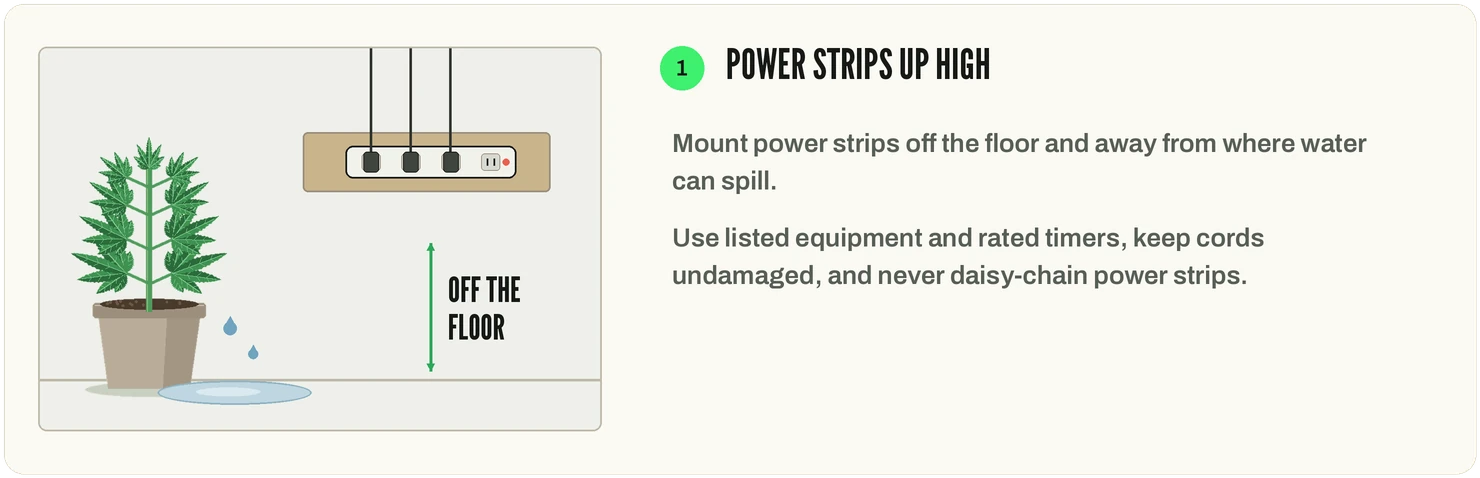
- Mount power strips off the floor and away from where water can spill.
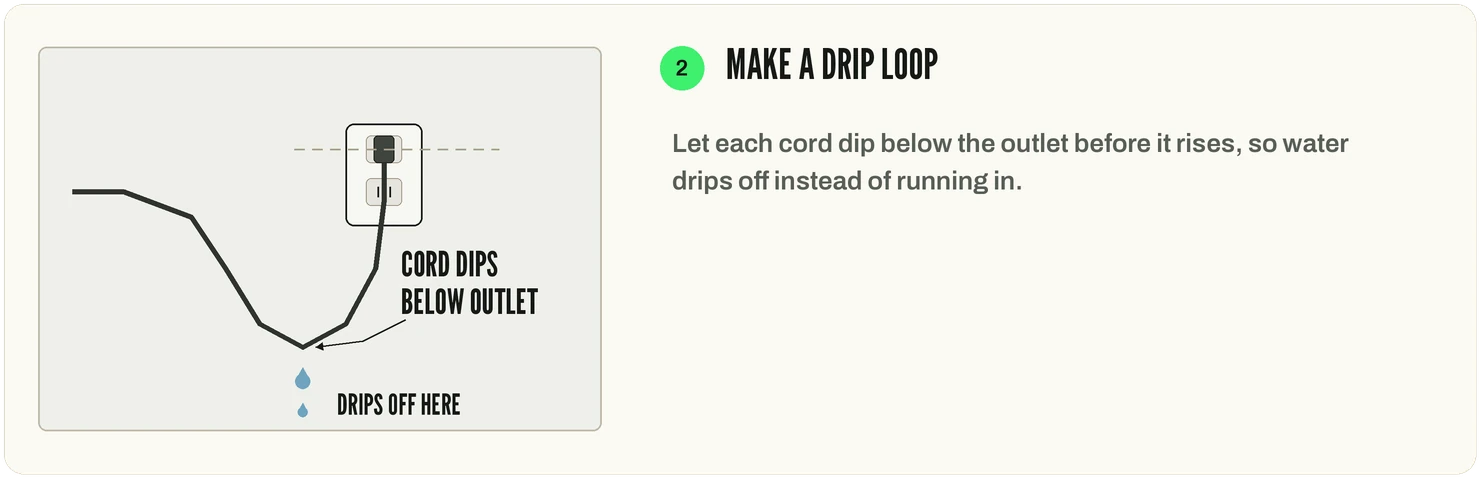
- Let each cord dip below the outlet before it rises, so water drips off instead of running in.
- Use listed equipment and rated timers, keep cords undamaged, and never daisy-chain power strips. Secure lights to rated supports and keep cooling openings clear. If you’re unsure about wiring or circuit capacity, stop and ask an electrician.
Light leaks
Photoperiod plants respond to uninterrupted darkness, so keep a stable dark period that suits your cultivar. How plants respond to interruptions depends on their intensity, timing and duration.
A 2021 experiment recommended a 10.8-hour dark period, but it tested flowering in tissue-cultured pieces of one genotype, not mature tent plants. That recommendation isn’t a universal whole-plant threshold.
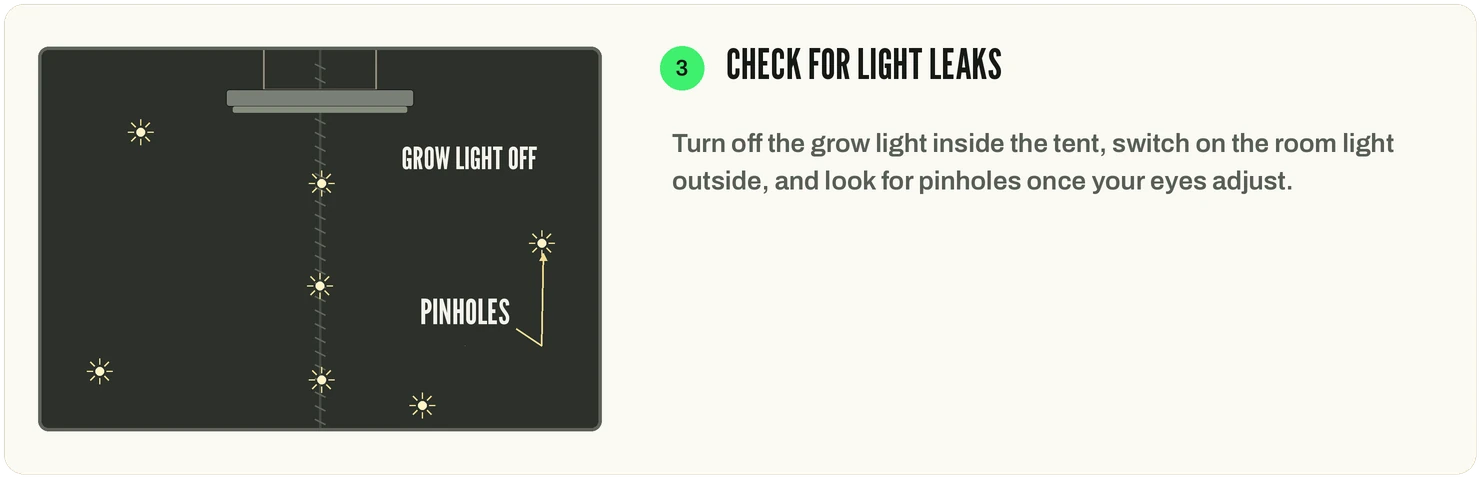
- Turn off the grow light inside the tent, switch on the room light outside, and look for pinholes once your eyes adjust.
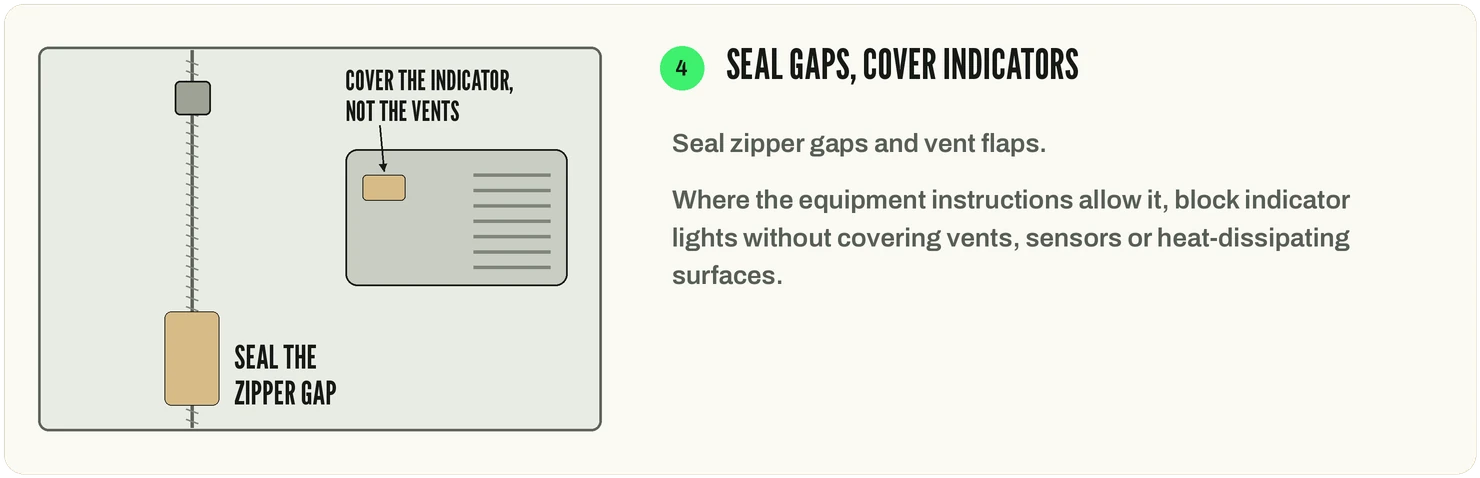
- Where the equipment instructions allow it, block indicator lights without covering vents, sensors or heat-dissipating surfaces.
- Seal zipper gaps and vent flaps.
Keep a working smoke alarm nearby. Don’t use portable heaters unattended or inside a wet, combustible tent. GFCI protection lowers shock risk, but it doesn’t make unsafe wiring or water exposure acceptable.
Sources (3)
- Moher, M., Jones, M., & Zheng, Y. (2021). Photoperiodic response of in vitro Cannabis sativa plants. HortScience, 56(1), 108–113. https://doi.org/10.21273/HORTSCI15452-20 [Evidence access: ABSTRACT VERIFIED; full text NOT VERIFIED.]
- U.S. Consumer Product Safety Commission (1990). Don’t use electric heaters in bathrooms, CPSC cautions. https://www.cpsc.gov/Newsroom/News-Releases/1990/Dont-Use-Electric-Heaters-In-Bathrooms-CPSC-Cautions [Evidence access: OFFICIAL SAFETY TEXT VERIFIED.]
- U.S. Consumer Product Safety Commission (2023). CPSC warns consumers to be cautious when using space heaters, furnaces and fireplaces this winter. https://www.cpsc.gov/Newsroom/News-Releases/2023/CPSC-Warns-Consumers-to-be-Cautious-When-Using-Space-Heaters-Furnaces-and-Fireplaces-This-Winter [Evidence access: OFFICIAL SAFETY TEXT VERIFIED.]