

Disease
Powdery mildew: white dusty patches on leaves
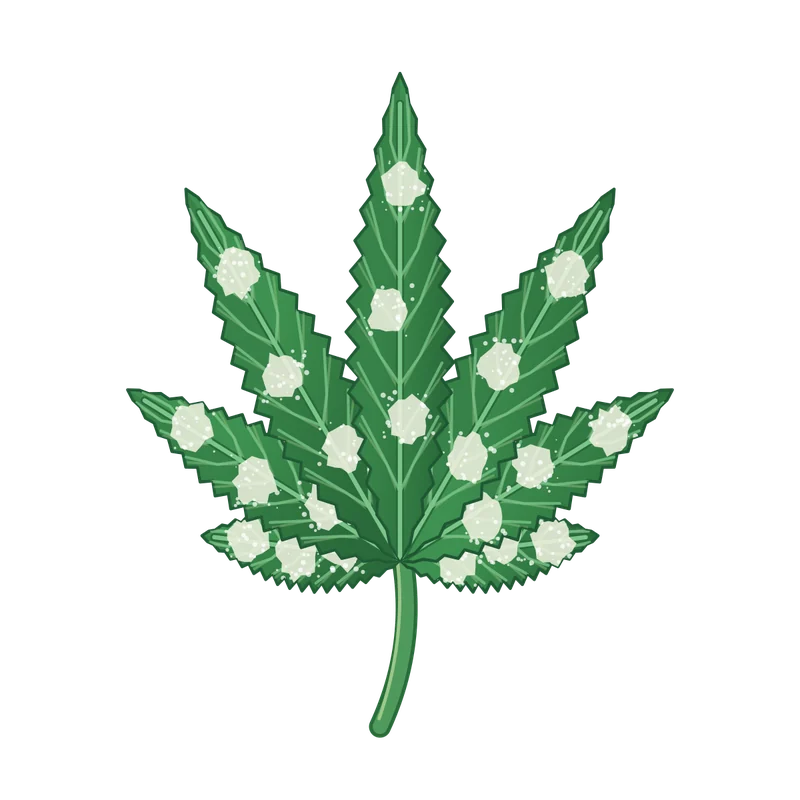
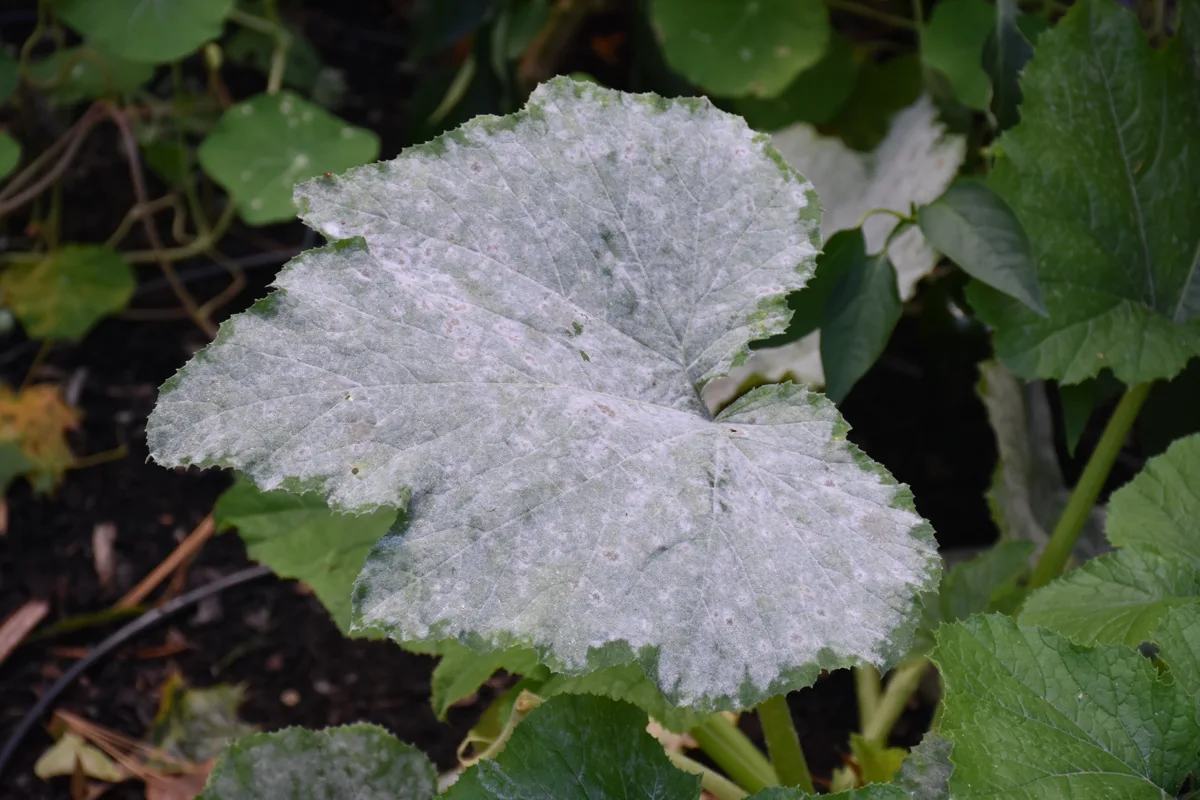
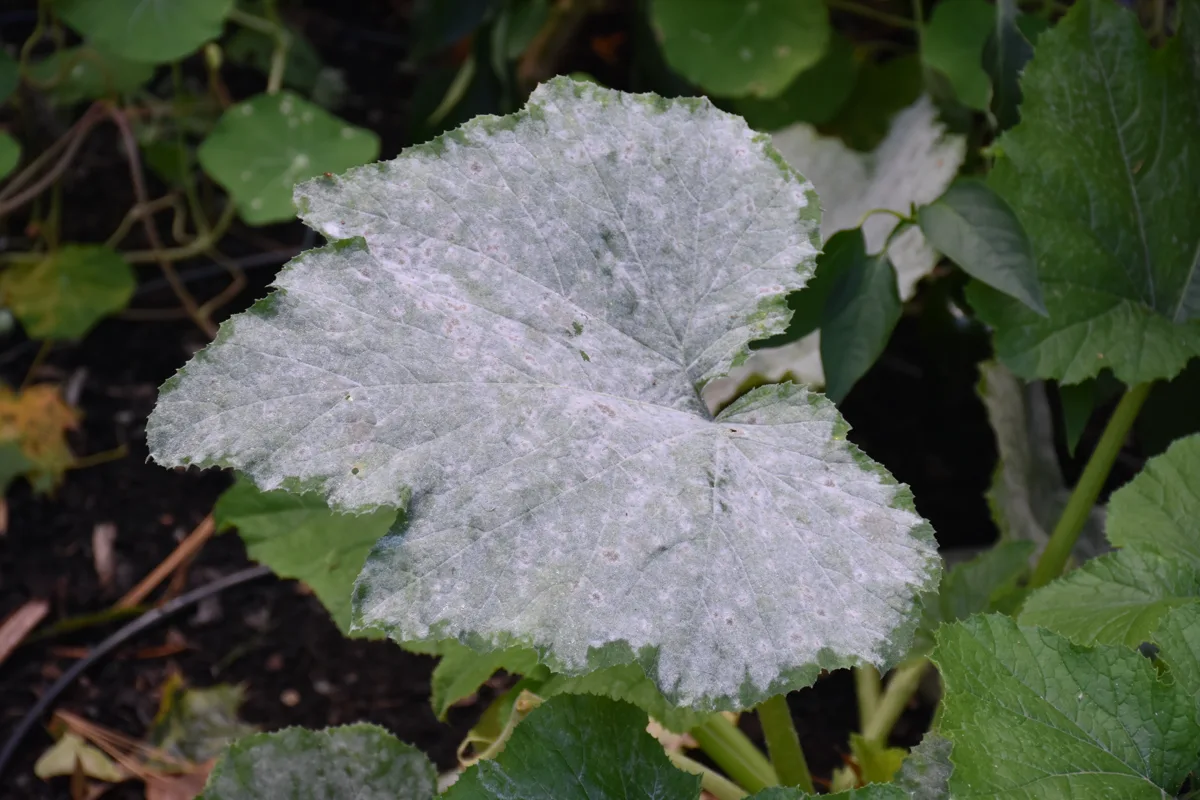
White, flour-like spots on the top of leaves are usually powdery mildew. Remove affected leaves early, because new spores can appear every 7 to 10 days.
On this page
It’s easier to slow down early than to clear once it reaches the buds, and it’s one of the few cannabis pests or diseases with a controlled treatment trial behind it.
What it looks like
It starts as whitish, powdery spots, usually on the upper surface of a leaf. They spread until whole leaves look dusted with flour, and they can move onto leaf stems, main stems and buds (Pacific Northwest handbook, Punja et al. 2019).
It limits photosynthesis, can make leaves drop early, and can reduce vigor and yield (the authors’ summary).
Why it happens
On cannabis, it’s mostly caused by the fungus Golovinomyces ambrosiae, which you may also see called G. cichoracearum. Spores move easily through the air and can also come from infected plants, debris, poorly cleaned surfaces and people working around the plants (the authors’ summary). Cuttings from an infected plant can carry it too (Punja et al. 2019).
It can appear at any stage (Pacific Northwest handbook) and it repeats fast: new spores can appear every 7 to 10 days while conditions suit it (Utah State).
How to confirm it
- Check the lowest leaves first, on both sides, starting a few weeks after planting (Utah State).
- Look for the pattern. Round white patches that spread and sit on the leaf surface are the classic sign. Utah State lists no look-alikes.
- Check the buds. Once you’ve found it on leaves, look there too.
What else it could be: heavy hemp russet mite infestations can look like fine powder, usually with curling leaf edges. Fine silk is more likely spider mites. Gray fuzz on a dying bud is bud rot, a different problem.
What to do
- Remove infected leaves early. It won’t cure the plant, but it can delay an outbreak (Pacific Northwest handbook). Remove them gently and bag them, so you don’t shake spores around.
- Improve airflow and spacing. Space plants so air can move, and control humidity. We didn’t find a tested humidity target for powdery mildew on cannabis, so treat any exact number with caution.
- Keep young plants away from infected older ones. Overlapping crops is how it can reach epidemic levels (Pacific Northwest handbook).
- Don’t overfeed nitrogen. Soft, lush growth is more susceptible (Pacific Northwest handbook).
- Choose genetics carefully next time. Seven of 12 cannabis strains tested showed partial or complete resistance (the authors’ summary). If one strain gets it every run, consider replacing it.
What the trial found
Researchers tested treatments on a highly susceptible strain, with four weekly sprays over three repeated trials (Scott & Punja 2021, the authors’ summary):
| Treatment | Result |
|---|---|
| Regalia Maxx (plant defense inducer) | Reduced disease in all three trials |
| MilStop (potassium bicarbonate) | Reduced disease in all three trials |
| Rhapsody ASO (Bacillus subtilis) | Reduced disease in all three trials |
| Stargus (Bacillus amyloliquefaciens) | Reduced disease in all three trials |
| ZeroTol (hydrogen peroxide) | Worked in two of the three |
| Actinovate SP (Streptomyces lydicus) | Worked in one of the three |
A daily 3 to 5 second pass with a handheld UV-C lamp also reduced mildew in two trials, and new growth was free of infection after 30 days. UV-C can injure eyes and skin, so don’t improvise this with a lamp that wasn’t made for it.
Spray products work best before the disease takes hold, and they need thorough coverage (Pacific Northwest handbook). Check that a product is allowed in your state and that the label allows the use.
Keep sprays off buds you plan to smoke. One study found residues of four synthetic chemicals carried into smoke, as much as 69.5% depending on the chemical and the device (Sullivan et al. 2013). We found no similar study for these products, so we can’t tell you they’re safe to smoke. The trial above was on plants in vegetative growth, not flowering buds.
Can you still use the flower?
Don’t smoke, vape, eat or process moldy flower. Mold can reach further than the spots you can see, so cutting around it, washing, curing or freezing doesn’t make it safe. That’s the same advice as our mold and root rot guide.
The risk isn’t precisely measured. Some molds found on buds can produce toxins, but it isn’t known how much they make in harvested buds (Punja et al. 2019). The clearest warnings are case reports: in a 2001 case report, a man with leukemia developed a serious lung infection, and the authors linked it to smoking a contaminated tobacco and marijuana mix. If your immune system is weakened, ask your doctor before using cannabis flower at all.
How much to trust this
Better than most pages here, because the trial was on cannabis itself. It was still one highly susceptible strain, in an indoor room under 24-hour light, and it scored leaves, not buds or yield. We read the abstract of the journal paper and the authors’ own full summary, not the paper’s full text.
The advice on spacing, nitrogen and timing comes from extension guidance for hemp.
Photos
1 photo of powdery mildew: white dusty patches on leaves

It could also be
These share symptoms with this one. Open each to see what tells them apart.
-
 Pest
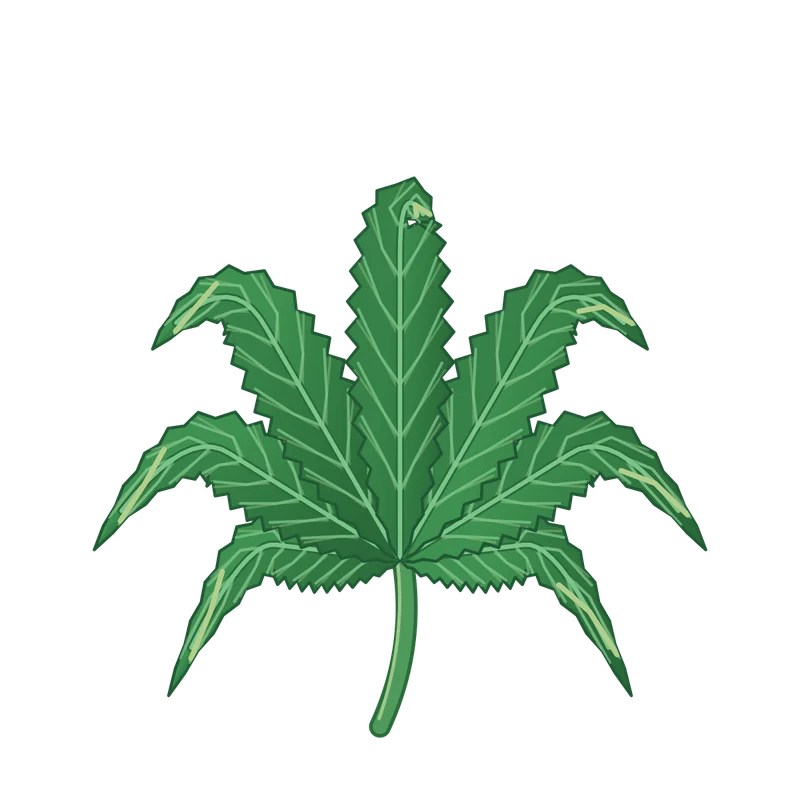
Hemp russet mites: the pest you can’t see
Upward-curling leaf edges and a dull, bronzed look, with no webbing and no bugs you can find, may mean russet…
Browning / necrosis · Curling or clawing · Other discolouration · Pale speckling
-
 Pest
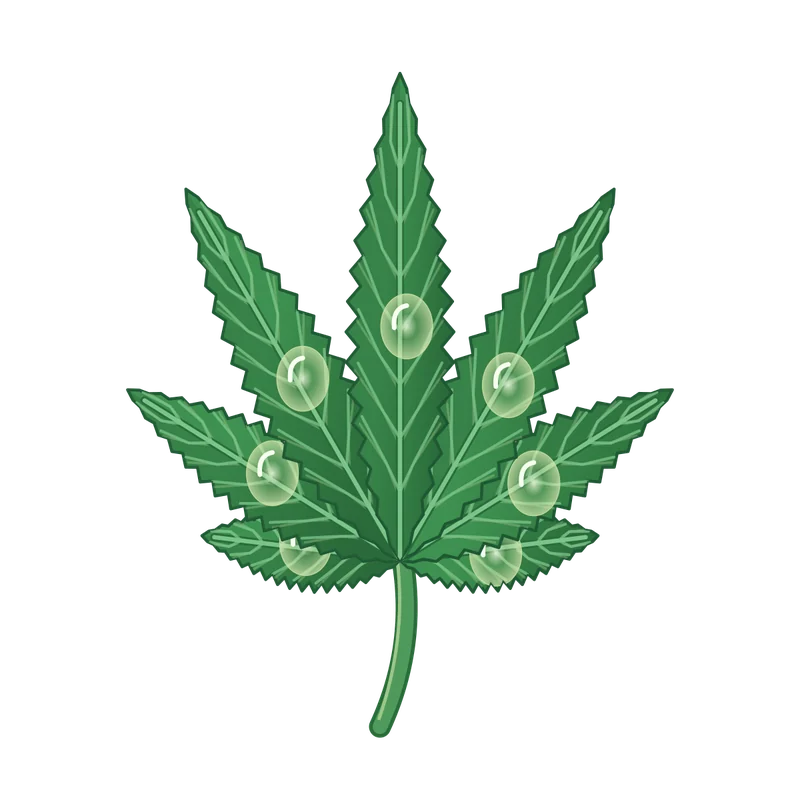
Aphids: clusters and sticky leaves
Clusters of small soft insects on stems and under leaves, often with sticky or shiny residue, mean aphids. They can…
Sticky or shiny residue · Stunted growth · Visible bugs · Wilting or drooping
-
 Nutrient toxicity
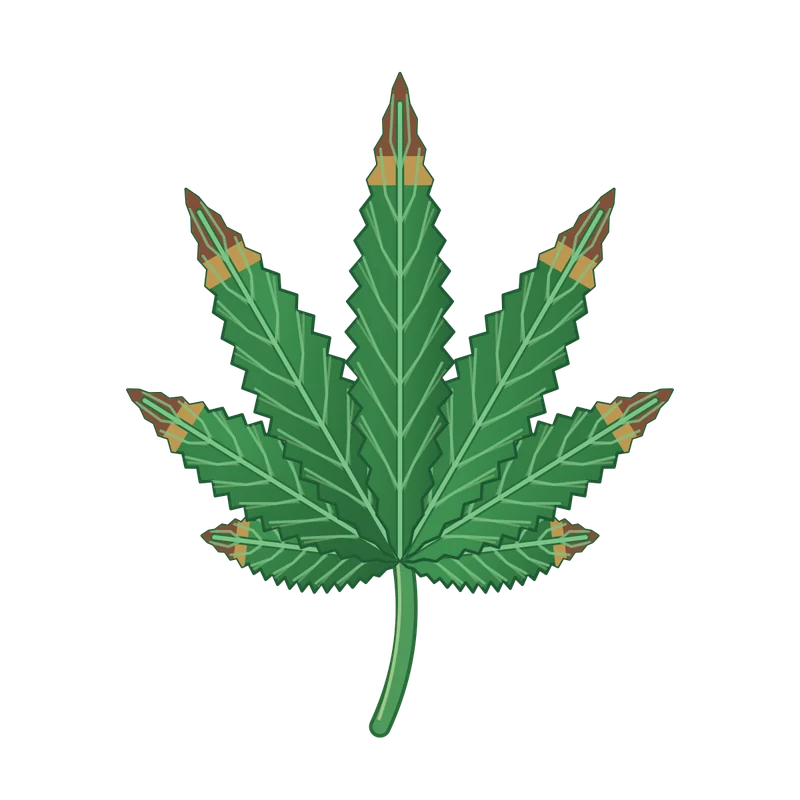
Nutrient burn: brown tips and edges from too much feed
Brown, crispy tips or edges after a stronger feed may be nutrient burn, but other problems look the same. Test…
Browning / necrosis · Curling or clawing · Wilting or drooping · Yellowing
-
 Pest
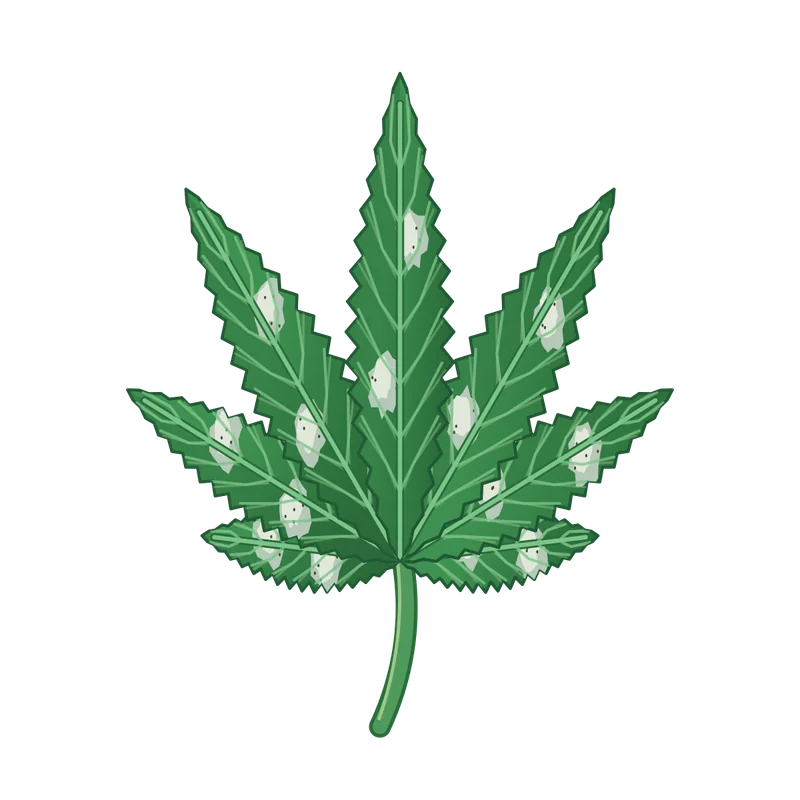
Thrips: silvery scrapes and black specks
Silvery or pale scraped patches with tiny black specks point to thrips. Look for the slender insects themselves before you…
Pale speckling · Silvery patches · Visible bugs · Buds
-
 Pest
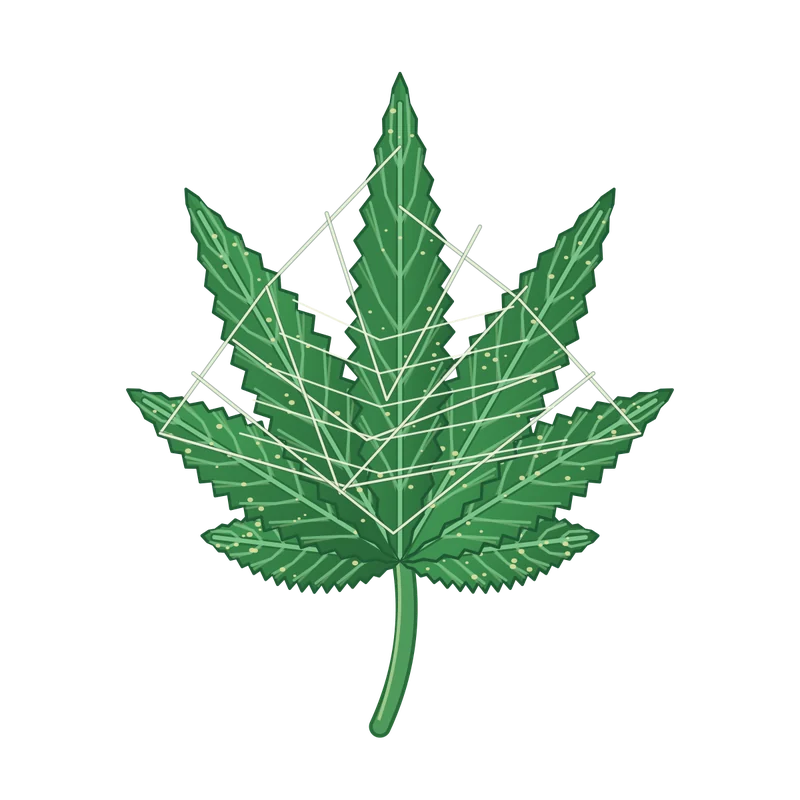
Spider mites: pale speckles, then webbing
Fine pale speckles on the leaves, with tiny moving dots or webbing underneath, point to spider mites. Check the underside…
Pale speckling · Visible bugs · Webbing · Yellowing
-
 Watering
Underwatering: a light pot and a limp plant
A limp plant in a pot that feels very light probably just needs water. Water it slowly until the whole…
Browning / necrosis · Stunted growth · Wilting or drooping · Yellowing
Sources (7)
- Scott, C., & Punja, Z.K. (2021). Evaluation of disease management approaches for powdery mildew on Cannabis sativa L. (marijuana) plants. Canadian Journal of Plant Pathology. https://doi.org/10.1080/07060661.2020.1836026 [Evidence access: ABSTRACT VERIFIED; full text NOT VERIFIED.]
- Scott, C., & Punja, Z.K. (2022). How can powdery mildew on cannabis be managed? Greenhouse Canada, the authors' summary of the study above. https://www.greenhousecanada.com/how-can-powdery-mildew-on-cannabis-be-managed [Evidence access: FULL TEXT VERIFIED.]
- Punja, Z.K., Collyer, D., Scott, C., Lung, S., Holmes, J., & Sutton, D. (2019). Pathogens and molds affecting production and quality of Cannabis sativa L. Frontiers in Plant Science, 10, 1120. https://doi.org/10.3389/fpls.2019.01120 [Evidence access: FULL TEXT VERIFIED.]
- Ocamb, C.M. Hemp (Cannabis sativa): Powdery Mildew. Pacific Northwest Plant Disease Management Handbook. https://pnwhandbooks.org/node/2870 [Evidence access: EXTENSION TEXT VERIFIED.]
- Utah State University Extension. Powdery mildew (hemp). https://extension.usu.edu/planthealth/ipm/notes_ag/hemp-powdery-mildew [Evidence access: EXTENSION TEXT VERIFIED.]
- Sullivan, N., Elzinga, S., & Raber, J.C. (2013). Determination of pesticide residues in cannabis smoke. Journal of Toxicology, 2013, 378168. https://doi.org/10.1155/2013/378168 [Evidence access: ABSTRACT VERIFIED; full text NOT VERIFIED.]
- Szyper-Kravitz, M., Lang, R., Manor, Y., & Lahav, M. (2001). Early invasive pulmonary aspergillosis in a leukemia patient linked to aspergillus contaminated marijuana smoking. PubMed record. https://pubmed.ncbi.nlm.nih.gov/11911432/ [Evidence access: ABSTRACT VERIFIED; full text NOT VERIFIED.]