

Nutrient toxicity
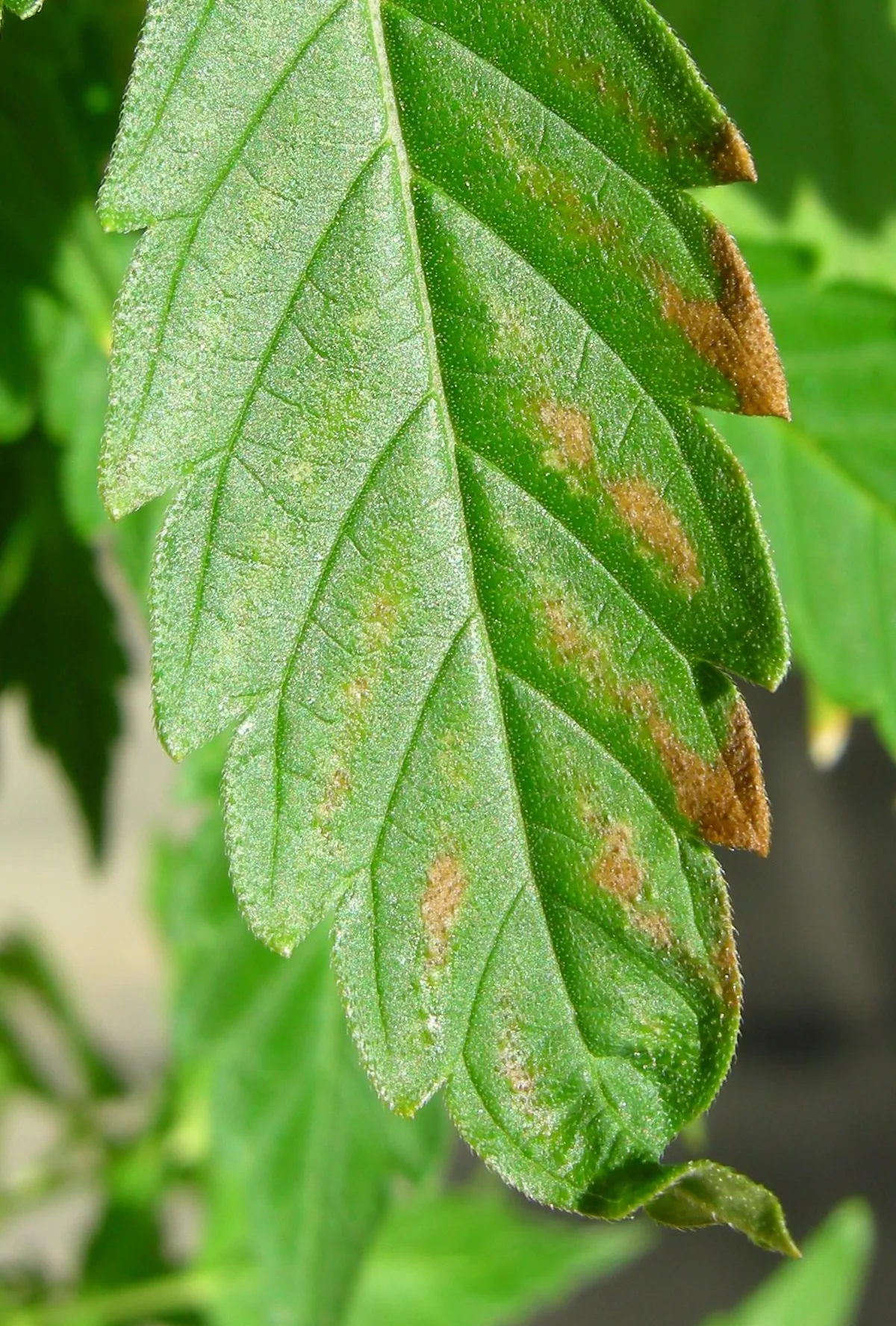
Nutrient burn: brown tips and edges from too much feed
Brown, crispy tips or edges after a stronger feed may be nutrient burn, but other problems look the same. Test before you change anything, and don't assume more feeding or a big…
On this page
Timing is your best clue. If the tips started browning soon after you raised the feed strength, this moves up the list.
What it looks like
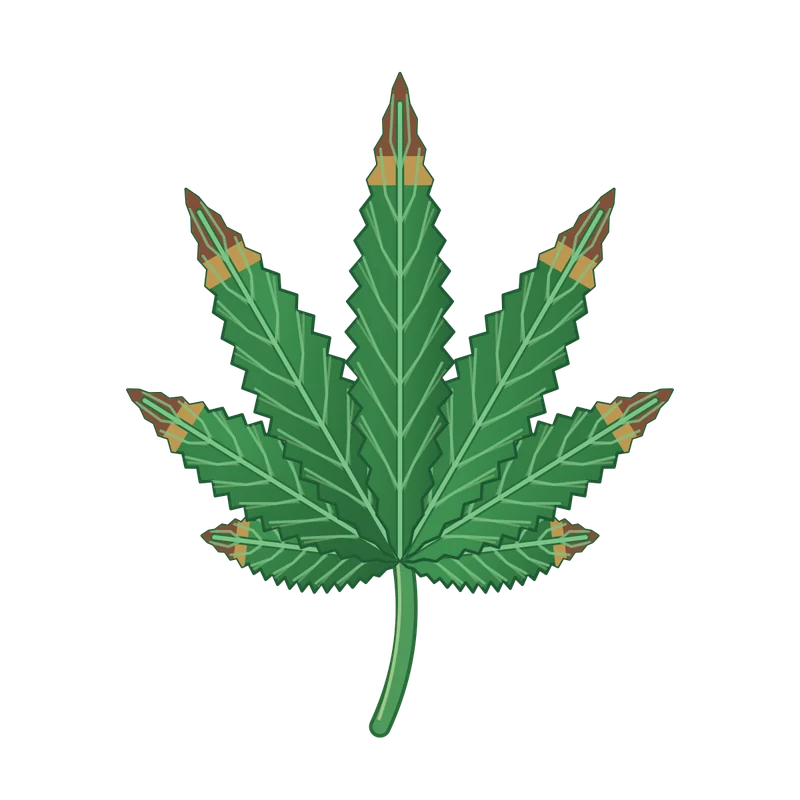
The signs growers know best are brown, crispy leaf tips and edges, which may then move inward. In greenhouse crops generally, very high salt levels can cause marginal leaf burn, wilting and slower growth (Purdue Extension).
What a surplus looks like depends on the nutrient. In a controlled study of a hemp cultivar, tenfold doses of manganese and boron both caused yellowing at the edges of lower leaves. It moved inward, and the edges eventually died. These took about 7 weeks to appear (Cockson et al. 2019). That’s a useful reminder that this kind of damage doesn’t always show up within days.
Why it happens
When plants use water faster than they use fertilizer, salts can concentrate in the mix. High salt levels reduce water uptake (Purdue Extension), so a plant can show drought-like symptoms even in a wet pot. Common triggers are stronger feed than the plant needs, feeding seedlings like mature plants, and pots that are rarely flushed through in systems that need it.
More feed isn’t automatically more growth. In one vegetative trial testing 30 to 320 mg/L of nitrogen, growth was best at 160, and impaired above and below it (Saloner & Bernstein 2020). Other trials and fertilizer types reached different numbers, so that isn’t a universal rate.
How to confirm it
- Look back at what changed. Did you raise the strength or add a product just before it started?
- Measure EC the same way each time. Record your input and use a consistent method on the mix. Ordinary runoff isn’t a standardized test, and a difference between input and runoff doesn’t prove a problem by itself. Our salt buildup guide explains how.
- Compare with ranges for your method. Purdue’s table for greenhouse crops rates a PourThru reading of 6.6 to 7.8 mS/cm as very high, with salt injury possible (Purdue Extension). That’s a general greenhouse guide, not a tested limit for cannabis.
- Watch new growth. Burnt tissue doesn’t heal, so old damage doesn’t tell you whether the problem is continuing.
What else it could be: this matters, because the fixes are opposites. Potassium deficiency also causes yellow, dying leaf edges on lower leaves (Cockson et al. 2019), and it needs more feed, not less. Heat, root problems and pH can look similar too. Dark green leaves don’t prove overfeeding: in the nitrogen trial, leaves were similarly dark from 160 to 320 mg/L (Saloner & Bernstein 2020).
What to do
- Hold off on adding anything until you’ve measured.
- If salts are confirmed high, lower the feed strength.
- If you need to leach, use the right method for your setup. In a well-drained, top-watered pot, follow a procedure for that medium with suitable low-salt water or nutrient solution. Don’t pour large volumes through a waterlogged plant, a living-soil bed or a bottom-fed system. In coco, plain-water leaching isn’t a substitute for balanced feeding.
- Remeasure the same way, then go back to a lower strength.
- Remove leaves only if they’re dead, and judge the result on new growth.
- Change one thing at a time. Stacking fixes makes it impossible to tell what worked.
How much to trust this
We didn’t find a controlled cannabis study that defines “nutrient burn” or sets a salt level at which tips burn. The term is grower language for several different things. The toxicity study used only one hemp cultivar in sand, with tenfold doses much higher than normal feeding mistakes, and described symptoms for just manganese and boron. The nitrogen trial measured growth, not tip burn. The salt ranges are for greenhouse crops in general, so measure, change one thing, and judge by new growth.
Photos
1 photo of nutrient burn: brown tips and edges from too much feed
It could also be
These share symptoms with this one. Open each to see what tells them apart.
-
 Watering
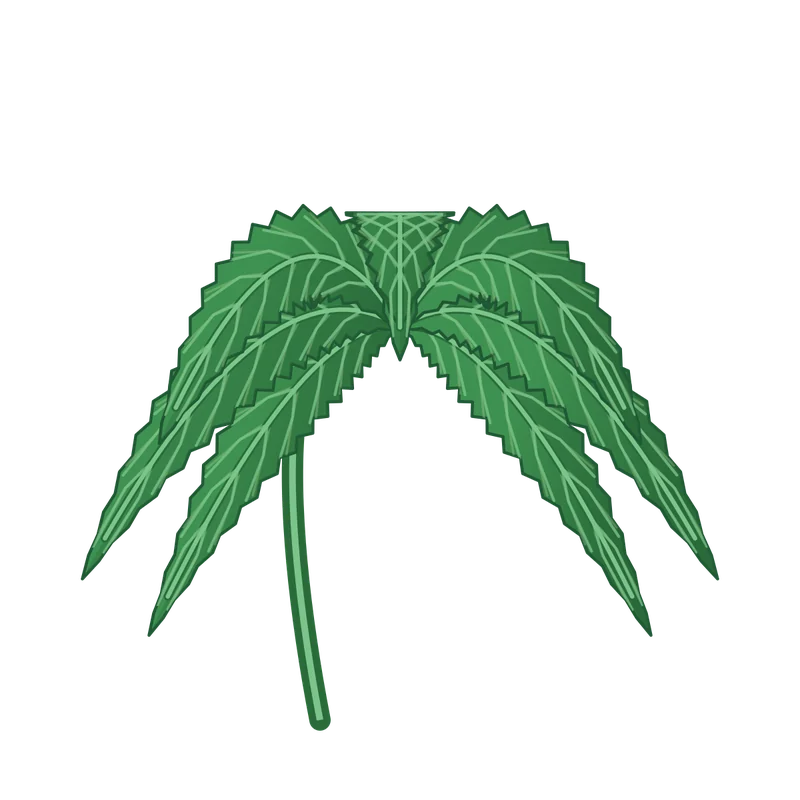
Underwatering: a light pot and a limp plant
A limp plant in a pot that feels very light probably just needs water. Water it slowly until the whole…
Browning / necrosis · Stunted growth · Wilting or drooping · Yellowing
-
 Pest
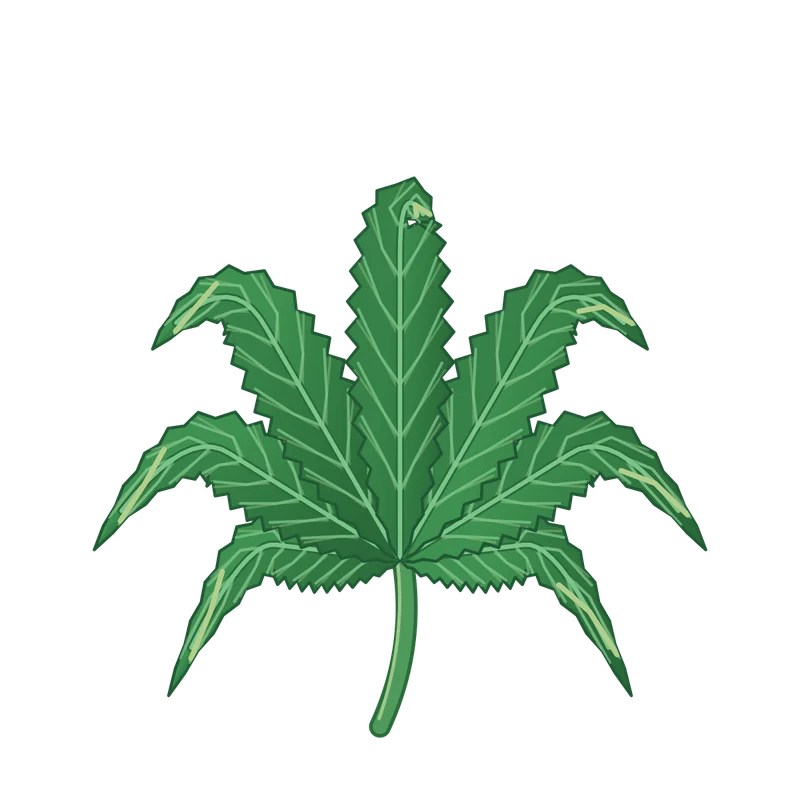
Hemp russet mites: the pest you can’t see
Upward-curling leaf edges and a dull, bronzed look, with no webbing and no bugs you can find, may mean russet…
Browning / necrosis · Curling or clawing · Other discolouration · Pale speckling
-
 Watering
Overwatering: wet roots that can’t get air
Drooping or yellowing leaves on a pot that still feels heavy usually mean the roots are too wet. Don't water…
Curling or clawing · Stunted growth · Wilting or drooping · Yellowing
-
 Light
Light burn: bleached leaves closest to the lamp
Pale or bleached leaves at the very top of the plant, closest to the light, may mean too much light…
Browning / necrosis · Curling or clawing · Other discolouration · Yellowing
-
Temperature
Heat stress: when the tent is running too hot
Wilting or curling on a plant with moist roots, in a tent that runs hot, may be heat stress. Measure…
Browning / necrosis · Curling or clawing · Wilting or drooping · Buds
-
 Pest
Aphids: clusters and sticky leaves
Clusters of small soft insects on stems and under leaves, often with sticky or shiny residue, mean aphids. They can…
Sticky or shiny residue · Stunted growth · Visible bugs · Wilting or drooping
Sources (3)
- Camberato, D.M., Lopez, R.G., & Mickelbart, M.V. pH and electrical conductivity measurements in soilless substrates. Purdue Extension, HO-237-W. https://ag.purdue.edu/department/hla/extension/extension-publications-library/ext-pubs/ho-237-w.html [Evidence access: EXTENSION TEXT VERIFIED.]
- Cockson, P., Landis, H., Smith, T., Hicks, K., & Whipker, B.E. (2019). Characterization of nutrient disorders of Cannabis sativa. Applied Sciences, 9(20), 4432. https://doi.org/10.3390/app9204432 [Evidence access: FULL TEXT VERIFIED.]
- Saloner, A., & Bernstein, N. (2020). Response of medical cannabis (Cannabis sativa L.) to nitrogen supply under long photoperiod. Frontiers in Plant Science, 11, 572293. https://doi.org/10.3389/fpls.2020.572293 [Evidence access: FULL TEXT VERIFIED.]